Forgotten Romantic Piano Concertos Beyond Grieg and Schumann
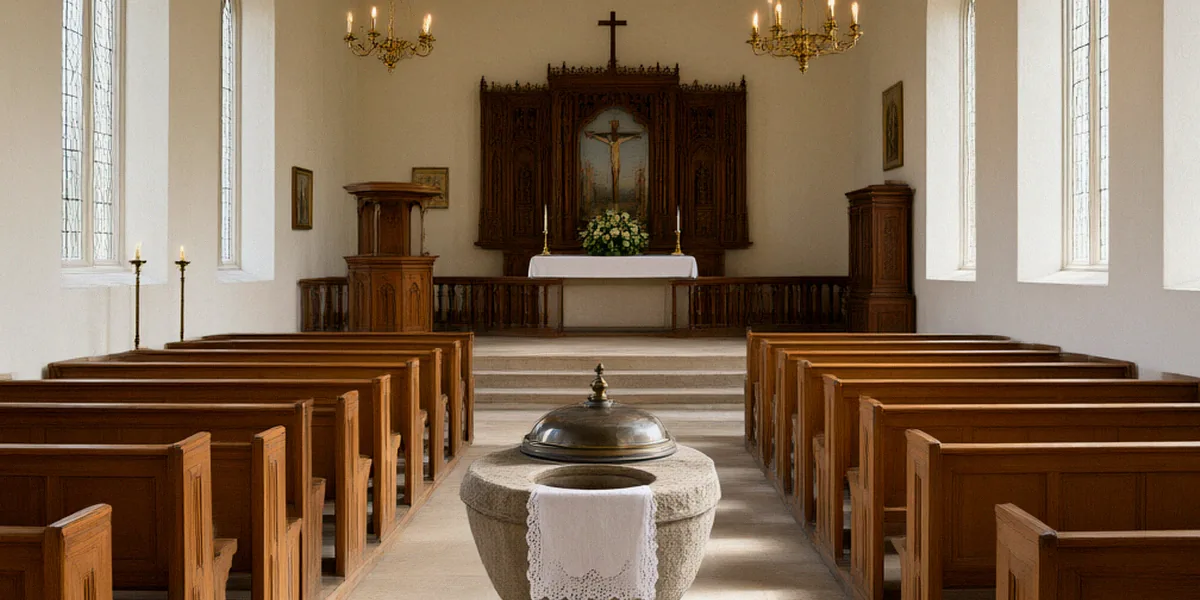
Why do the same handful of Romantic piano concertos dominate concert halls and record catalogues while dozens of equally thrilling works gather dust? Walk into any concert venue in Britain and you will hear Grieg’s Piano Concerto in A minor or Schumann’s in the same key far more often than anything by Saint-Saëns, Henselt, or Stenhammar. Yet these neglected works brim with drama, wit, and virtuosity that can match the warhorses note for note. Here at baxian.org.uk, we believe the same curiosity that draws us to Hampshire’s quieter parish churches — with their medieval wall paintings and stained glass — should draw us to these forgotten concertos. Both reward the listener willing to look beyond the obvious.
Why the Romantic Piano Concerto Repertoire Got So Narrow
The Romantic piano concerto as a genre spans roughly a century and produced hundreds of works. Only a tiny fraction survive in regular rotation. The reasons are less about quality than about economics, habit, and the conservatism of the competition circuit.
The Recording Industry’s Role in Shaping the Canon
When the long-playing record arrived in the 1950s, labels needed safe sellers. Pianists with existing reputations recorded the concertos they already performed, and those recordings became the reference points for the next generation. Grieg and Schumann were short, tuneful, and technically manageable for a broad range of soloists, so they were recorded again and again. Works such as Saint-Saëns’s Piano Concerto No. 2 in G minor, Op. 22 sat outside that loop for decades, despite its famous opening solo and irresistible finale. The canon became a feedback loop: what was recorded was taught, what was taught was performed, and what was performed was recorded.
Competition Repertoire and the Safe Choice
Competitions reinforce the same conservatism. A young pianist choosing a concerto for a final round needs a piece that juries know, that fits a standard orchestral rehearsal schedule, and that showcases technique without confusing the audience. Grieg and Schumann fit that brief perfectly. Meanwhile, works like Moritz Moszkowski’s Piano Concerto in E major, Op. 59, demand a very different kind of brilliance — filigree passagework and charm rather than storm and stress — and so they slip through the net. Our team thinks that is a genuine loss.
Saint-Saëns and the French Concerto Tradition
Camille Saint-Saëns wrote five piano concertos, and each is a model of structural elegance and dry wit. His French sensibility favours clarity over bombast, which may be exactly why the German-dominated canon overlooked him for so long.
Saint-Saëns Piano Concerto No. 2: The Crowd-Pleaser We Overlook
The Piano Concerto No. 2 in G minor, Op. 22 opens with a solo cadenza-like passage that would stop any concert hall in its tracks. It then moves through a scherzo-like Allegro, a tender Andante, and a tarantella finale of pure exhilaration. The Piano Concerto No. 4 in C minor, Op. 44, is even more ingenious, built from two linked movements and a theme that transforms across the whole work. Both deserve a place alongside anything in the German canon.
Cécile Chaminade and the Concertstück
Cécile Chaminade’s Concertstück for piano and orchestra, Op. 40, offers a compact, lyrical companion to the Saint-Saëns concertos. It is a single-movement work of real warmth, and it reminds us how many French Romantic concertante pieces remain almost unknown outside specialist circles.
German and Austrian Gems: Henselt, Moszkowski, and Reinecke
Move east and north from Paris and the neglected repertoire grows richer still. Three names deserve particular attention.
Henselt’s F Minor Concerto: A Forgotten Virtuoso Showpiece
Adolf von Henselt was one of the great piano virtuosos of the nineteenth century, admired by Liszt and Schumann alike. His Piano Concerto in F minor, Op. 16 combines a dramatic first movement with a serene slow movement and a brilliant finale. Its technical demands — wide stretches, rapid octaves, delicate fingerwork — explain why it fell out of favour with amateur pianists, but they are precisely what makes it thrilling in the hands of a committed soloist.
Moszkowski and Reinecke: Lyricism Worth Reviving
Moritz Moszkowski’s Piano Concerto in E major, Op. 59, is a sunlit work full of graceful melody. Carl Reinecke’s Piano Concerto No. 1 in F sharp minor, Op. 72, is more introspective but equally rewarding. Both composers wrote music of genuine charm that asks for real technical control without ever becoming merely showy.
Scandinavian and Eastern European Voices
Beyond Germany and France, national styles gave the Romantic piano concerto a distinctive colour that the standard canon rarely acknowledges.
Stenhammar’s First Concerto: Nordic Drama Without the Fame
Wilhelm Stenhammar’s Piano Concerto No. 1 in B-flat minor, Op. 1 is a youthful, passionate work steeped in Nordic drama. Written when the composer was still in his twenties, it wears its influences openly — Brahms, Liszt, even Wagner — yet already sounds like Stenhammar. Grieg’s concerto gets all the attention; this one deserves equal curiosity.
Sauer and Scharwenka: Virtuoso Romantics from the East
Emil von Sauer’s Piano Concerto No. 1 in E minor and Xaver Scharwenka’s Piano Concerto No. 1 in B-flat minor, Op. 32, are both large-scale virtuoso works from the late Romantic period. They show how composers from the eastern edges of the German-speaking world absorbed and transformed the tradition.
Where Hampshire Churches Fit In
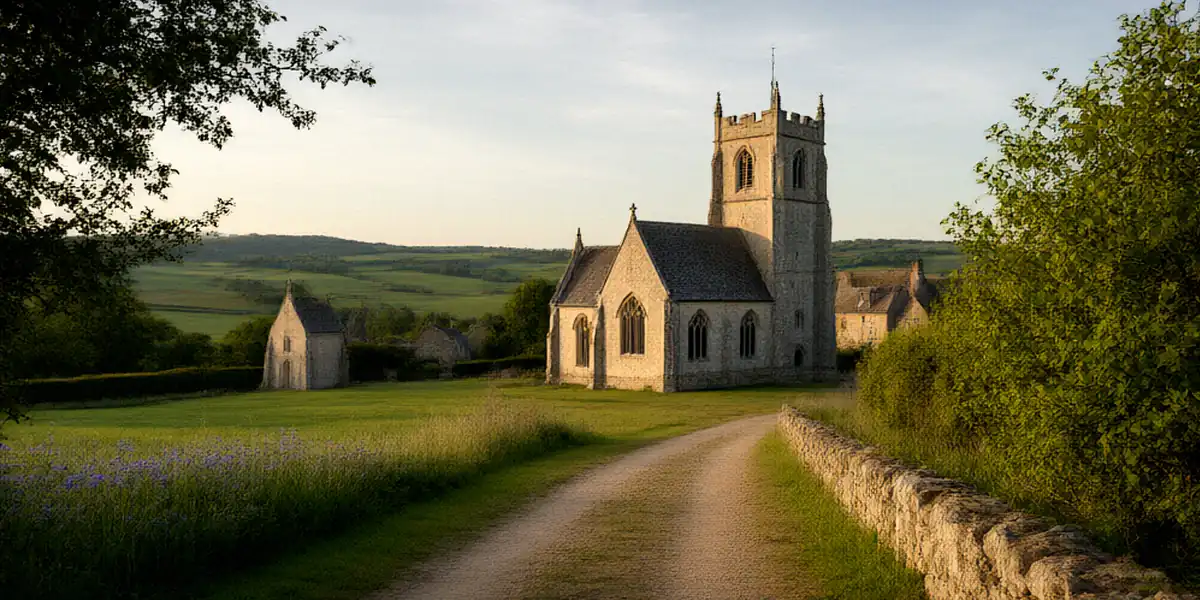
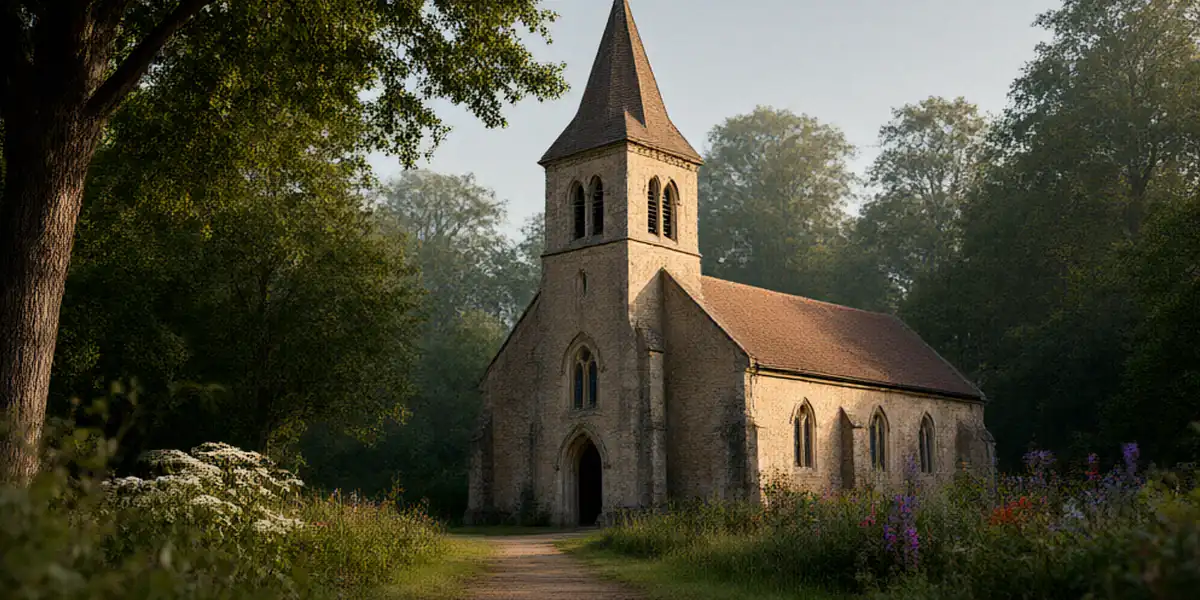
We see a direct parallel between neglected concertos and overlooked Hampshire churches. Both sit quietly within reach, both reward curiosity, and both offer a more personal cultural experience than the well-trodden alternative.
Medieval Wall Paintings as Visual Counterpoint
St Peter’s Church, Nether Wallop, Hampshire, is known for its medieval wall paintings — faded, fragmentary, and far more moving than a polished modern interior. They function like the slow movement of a forgotten concerto: understated, easy to miss, and unforgettable once noticed.
Stained Glass and the Romantic Imagination
St Mary’s Church, Breamore, Hampshire, with its Anglo-Saxon rood, offers another kind of quiet revelation. Its stained glass and ancient stonework create exactly the atmosphere of hushed wonder that Romantic piano music at its best evokes. A visit here, followed by an evening of Saint-Saëns or Stenhammar, makes for a genuinely coherent day out.
How to Start Listening and Exploring
You do not need a specialist’s knowledge to begin. A few recordings and a single weekend are enough.
Five Recordings to Begin With
- Saint-Saëns: Piano Concertos Nos. 2 and 4 — look for the complete cycle on Hyperion or Naxos.
- Henselt: Piano Concerto in F minor, Op. 16 — available on the Hyperion Romantic Piano Concerto series.
- Stenhammar: Piano Concerto No. 1 in B-flat minor, Op. 1 — paired recordings with the Second Concerto are widely available.
- Moszkowski: Piano Concerto in E major, Op. 59 — a fine entry point on Hyperion.
- Chaminade: Concertstück, Op. 40 — often paired with French concertante works.
A Hampshire Heritage and Music Weekend
- Saturday morning: visit St Mary’s Church, Breamore, and its Anglo-Saxon rood.
- Saturday afternoon: drive to St Peter’s Church, Nether Wallop, to see the medieval wall paintings.
- Saturday evening: listen to Saint-Saëns’s Piano Concerto No. 2 in G minor, Op. 22, at home.
- Sunday morning: return to a favourite church for quiet reflection.
- Sunday afternoon: play Henselt’s F minor Concerto and Stenhammar’s First Concerto back to back.
Seeking out forgotten Romantic piano concertos and Hampshire’s quieter church treasures offers a richer, more personal cultural life than sticking to the familiar canon. The next time you reach for Grieg or Schumann, consider Saint-Saëns, Henselt, or Stenhammar instead — and then plan a visit to a Hampshire church where the same spirit of discovery awaits.
FAQ
Which Saint-Saëns piano concerto should I hear first?
Start with the Piano Concerto No. 2 in G minor, Op. 22. Its opening solo and tarantella finale make it immediately engaging, and it leads naturally to the equally fine No. 4.
Is Henselt’s Piano Concerto in F minor, Op. 16, difficult to find?
Not especially. It appears on the Hyperion Romantic Piano Concerto series and on several streaming services, often paired with other neglected works.
Why is Stenhammar’s Piano Concerto No. 1 in B-flat minor, Op. 1, so rarely performed?
It is an early work by a composer better known for his symphonies, and it has never entered the standard competition repertoire. Recordings exist but are not as plentiful as those of the Grieg concerto.
What makes Hampshire churches worth visiting alongside this music?
St Mary’s Church, Breamore, with its Anglo-Saxon rood, and St Peter’s Church, Nether Wallop, with its medieval wall paintings, offer the same quiet, rewarding discovery as a forgotten Romantic concerto.
Can I explore both the music and the churches in one weekend?
Yes. Our suggested itinerary pairs a Saturday of church visits with an evening of Saint-Saëns, followed by a Sunday of Henselt and Stenhammar. It is a simple, inexpensive way to broaden your cultural horizons.


Post Comment