Reading a Parish Church: Naves, Chancels and Fonts Explained
You push open the heavy oak door of a quiet Hampshire parish church and step inside. The air is cool, the light falls in coloured patches across the stone floor, and for a moment the noise of the village outside simply disappears. Then you look up. There are round arches, a carved stone bowl near the door, a patch of faded colour on the wall, a window full of figures in glass. The building itself is a history book, and it has been waiting patiently for someone to read it. Once you know what you are looking at, every visit changes — and that is exactly what we want to share with you.
Why Learn to Read a Parish Church?
Hampshire parish churches are living archives. They have been added to, repaired, reordered and loved by generation after generation, and each change left a mark. A blocked doorway, a change in stone colour, a roof line that does not quite match the wall beneath it — these are not accidents. They are evidence.
Understanding the basic layout of a church helps visitors appreciate the medieval wall paintings and stained glass they might otherwise walk straight past. A faded figure above an arch, a fragment of glass reset high in a window, a carved face on a font: all of these reward the visitor who knows where to look and what the different parts of the building were for.
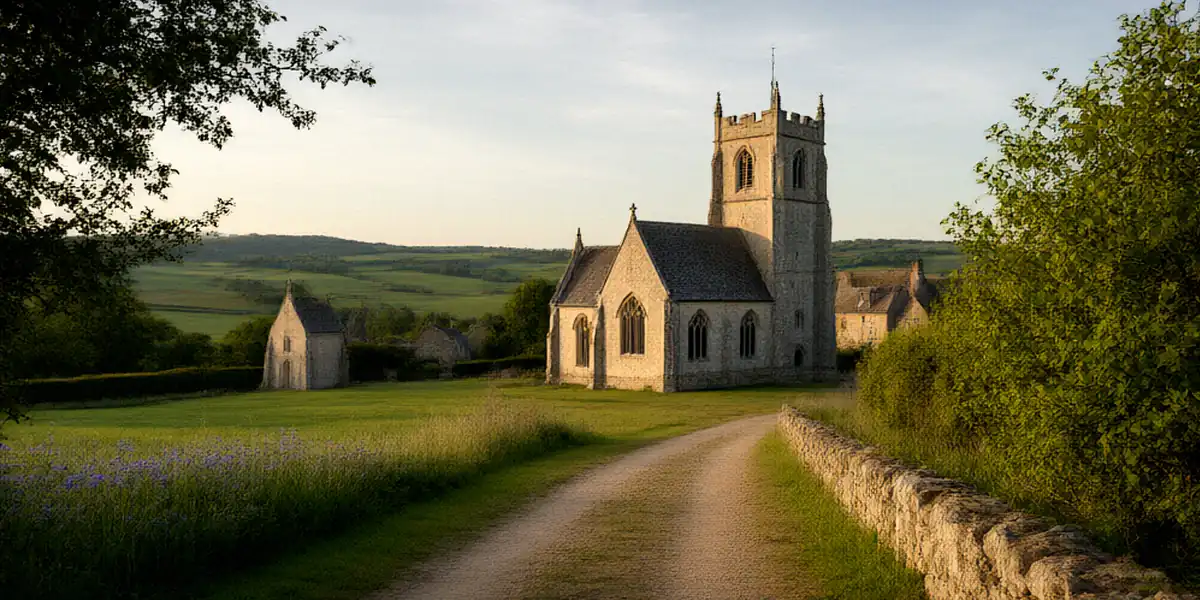
Our team visits churches such as St Mary’s, Breamore, to practise this approach. Breamore is a wonderful teaching church: it retains clear Norman work, and it lets us show people how a single building can be read like a document. We take the same method to churches across the county, and we find something new every time.
The Nave: The Heart of the Parish
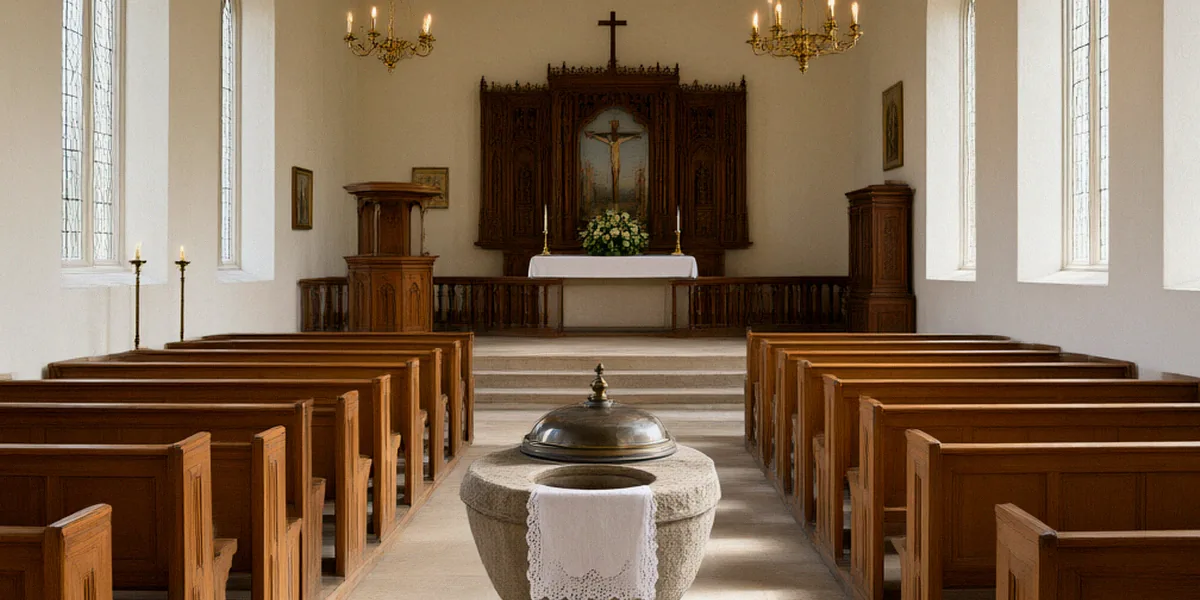
The nave is the main body of the church, the long space where the congregation gathered. The word comes from the Latin navis, a ship — the same root that gives us “navy”. In most Hampshire churches the nave is the oldest and largest part of the building, and it is where the parish community has stood, sat, listened and sung for centuries.
Many naves were extended in the thirteenth and fourteenth centuries as populations grew and prosperity allowed. You can often see the join: a thicker, earlier wall giving way to a thinner, later one, or a change from small round-headed windows to larger pointed ones. Look at the corners of the building from outside, and the story of its growth becomes surprisingly clear.
Norman and Gothic Naves
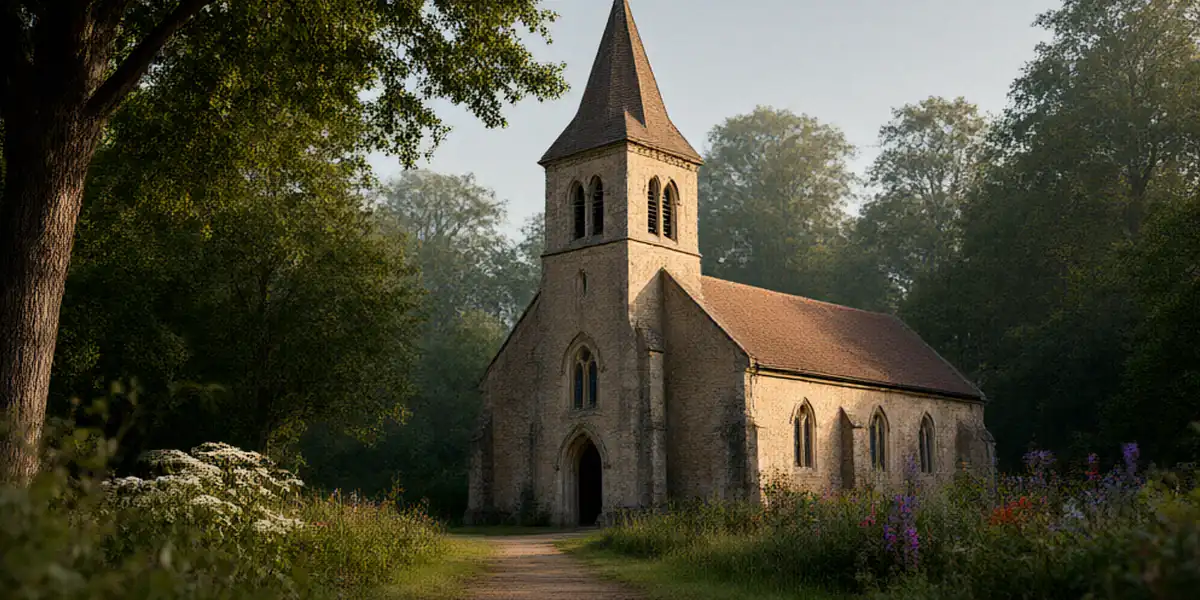
Norman work, roughly from the eleventh and twelfth centuries, is usually recognisable by its round arches, thick walls and small windows. At St Mary’s, Breamore, the surviving Norman features — including the round arches — give the nave a solid, grounded feel that later Gothic additions do not quite share.
Gothic work, from the thirteenth century onwards, tends to be taller, lighter and more pointed. Builders wanted more light and more verticality, so arches became pointed and windows grew larger. In many naves you will find both: a Norman core with Gothic windows cut into it later.
Reading the Roof and Windows
The roof is one of the most underrated clues in any church. A steeply pitched roof suggests an older structure; a shallow, flatter roof may indicate a later rebuilding or a change in covering materials. Look at the timbers if they are exposed, and at the line where the roof meets the wall.
Windows tell a similar story. A small, deep-set, round-headed opening is likely Norman. A tall window with flowing tracery is likely Decorated Gothic, from the fourteenth century. A window with straight vertical bars and horizontal transoms is likely Perpendicular, from the fifteenth century or later. And remember: naves frequently carry traces of medieval wall paintings, often hidden under later plaster or whitewash. Look for faint colour above arches, beside windows and around doorways.
The Chancel: The Priest’s Domain
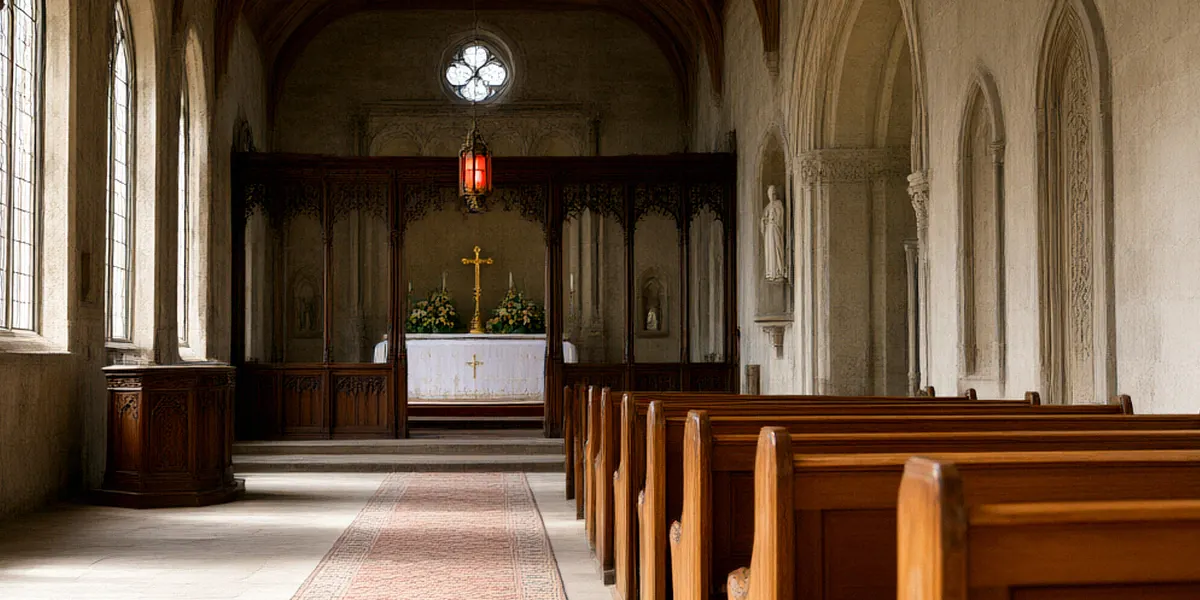
The chancel is the area at the east end of the church, beyond the nave, where the altar stands. It is architecturally distinct from the nave, and it was traditionally the responsibility of the rector rather than the parish — which is why chancels were often rebuilt in the Gothic style while the nave kept its older character.
Because the chancel houses the altar, it is the focus of the liturgy. It is also a prime location for stained glass, since the east window sits directly behind the altar and was usually the most generously glazed opening in the building.
The Chancel Arch
The chancel arch frequently marks the division between congregation and clergy. In many churches it is the single most impressive piece of masonry in the building: a wide, often richly moulded arch, sometimes with carved capitals. Stand beneath it and look up. You are standing exactly where the medieval parish would have stood, watching the priest move between two worlds.
Stained Glass in the Chancel
Stained glass in the chancel deserves slow looking. Medieval glass was frequently destroyed or scattered during the Reformation and later upheavals, so what survives is often a patchwork: fragments of figures, borders and canopy work reset into later windows. Even a single surviving panel can tell you about patronage, devotion and craftsmanship.
When you find good glass, take your time. Note the colours, the quality of the painting on the glass, and whether the figures seem to belong together. Often they do not — and that itself is part of the history.
The Font: Entry into the Church
The font is often the oldest fixture in the building. It stands near the door because baptism is the entry into the church, and it has usually stayed put while everything around it changed. Fonts survive the Reformation better than most furnishings, largely because they were too heavy and too useful to remove.
Norman Tub Fonts
Norman tub fonts are a particular joy. Carved from local stone — often limestone or Purbeck marble — they are simple, sturdy and frequently decorated with arcading, chevrons or geometric patterns. You will find them in churches across Hampshire, and they anchor the building to its earliest Christian community.
Because they are so durable, Norman tub fonts often preserve carving that has vanished everywhere else in the church. They are, in effect, a surviving piece of the medieval decorative scheme.
Reading Font Carvings
Font carvings can be read like medieval wall paintings in stone. A band of arcading may represent the church itself. A serpent or a dragon may stand for sin or the devil. A dove may represent the Holy Spirit. Some fonts carry scenes from the life of Christ or the saints, worn smooth by centuries of hands.
Here is a simple method we use when reading a font:
- Look at the shape first — tub, square, octagonal — and note the date it suggests.
- Examine the band of decoration around the bowl, and identify any repeating motifs.
- Look for figures, animals or faces, and ask what they might symbolise.
- Check the base and stem for later additions or repairs.
- Compare it with other fonts you have seen locally — regional styles emerge quickly.
Other Features to Read: Towers, Porches and Pews
The tower is usually the latest major addition to a medieval church, often built in the fifteenth century when parishes wanted bells and a statement of status. Look at the buttresses, the window openings and the battlements: they will help you date it.
The south porch was the traditional entrance, and it often carries its own history — a sundial, a scratch dial, a carved stone, or a room above used for storage or a school. Pews are usually much later than the medieval building, often sixteenth or seventeenth century, and their arrangement tells you how worship changed over time.
The Romantic piano music of Saint-Saëns, particularly his piano concertos, often accompanies our visits and reflections on these spaces. There is something fitting about it: the same period that rediscovered the medieval past also produced music of great colour and atmosphere, and the two sit together beautifully in a quiet Hampshire church.
Conclusion
Once you can read naves, chancels and fonts, every Hampshire church visit becomes a richer encounter with medieval art and parish history. You will start to notice the round arch that does not match its neighbour, the faint colour above the doorway, the carved band around the font, the glass reset high in the east window. The building stops being a backdrop and becomes a voice. We hope this guide helps you hear it — and that your next visit to a Hampshire parish church is the first of many that you read rather than simply see.
FAQ
What is the difference between a nave and a chancel?
The nave is the main body of the church where the congregation gathers. The chancel is the area at the east end, beyond the chancel arch, where the altar stands and where the clergy traditionally officiated. The nave is usually the older and larger space; the chancel was often rebuilt in the Gothic style.
Why are Norman tub fonts so common in Hampshire churches?
Norman tub fonts were carved from durable local stone and were too heavy and too useful to remove during the Reformation. Because they were rarely replaced, they survive in large numbers and often preserve carving that has been lost elsewhere in the building.
Where can I see good examples of medieval wall paintings in Hampshire?
Many Hampshire parish churches retain traces of medieval wall paintings, often above arches, beside windows and around doorways. Our team visits churches such as St Mary’s, Breamore, to study and share these survivals, and we recommend looking carefully in the nave in particular.
How does Saint-Saëns relate to Hampshire churches?
The Romantic piano music of Saint-Saëns, especially his piano concertos, often accompanies our visits and reflections. The music belongs to the same era that rediscovered the medieval past, and it suits the atmosphere of these quiet, historic spaces remarkably well.
What should I look at first when I enter an unfamiliar parish church?
Start at the door: look at the font, then turn and look west down the nave, then east towards the chancel arch. Note the arches, the windows, the roof and any surviving colour. That simple circuit will give you the building’s basic story in a few minutes.


Post Comment