Medieval Wall Paintings in Hampshire Churches Worth a Winter Visit
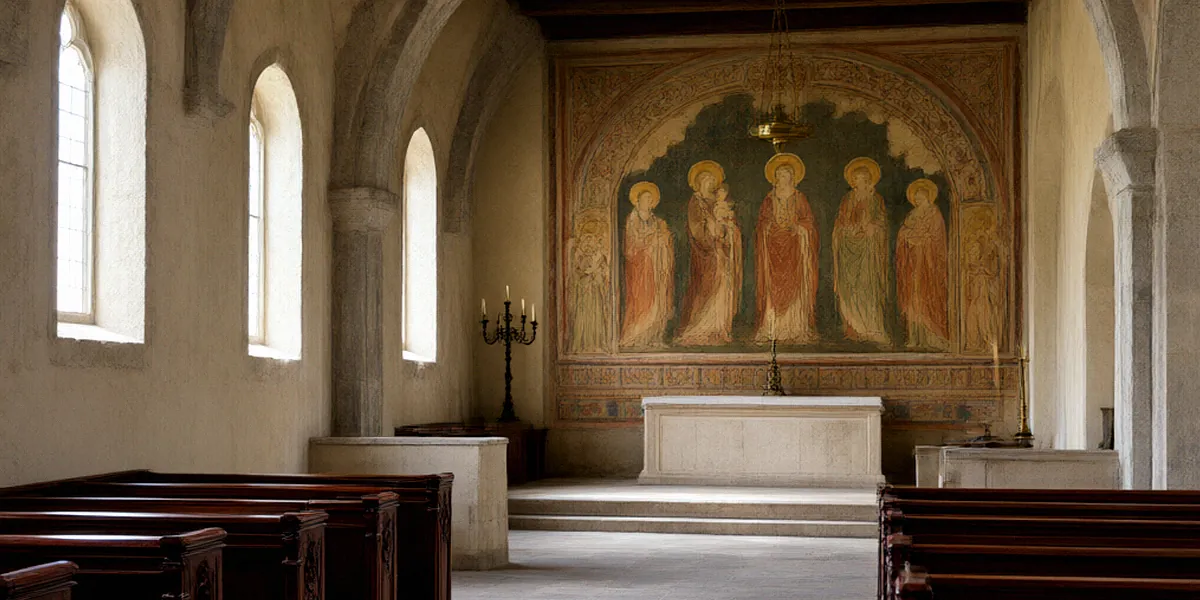
Winter light in Hampshire is thin, pale and unforgiving. It slips through stained glass in low, slanting shafts and leaves the corners of ancient naves in shadow. Yet that same cold, quiet light is exactly what makes the county’s medieval wall paintings come alive. With fewer visitors, longer shadows and the low winter sun raking across limewashed walls, figures that lie almost invisible in summer suddenly emerge: a crowned Christ in judgement, a weathered St Christopher, a scatter of consecration crosses. We think winter is the connoisseur’s season for Hampshire churches, and here is why, where to go, and how to pair the experience with the Romantic piano music of Saint-Saëns.
Why Winter Is the Best Time to See Hampshire’s Medieval Wall Paintings
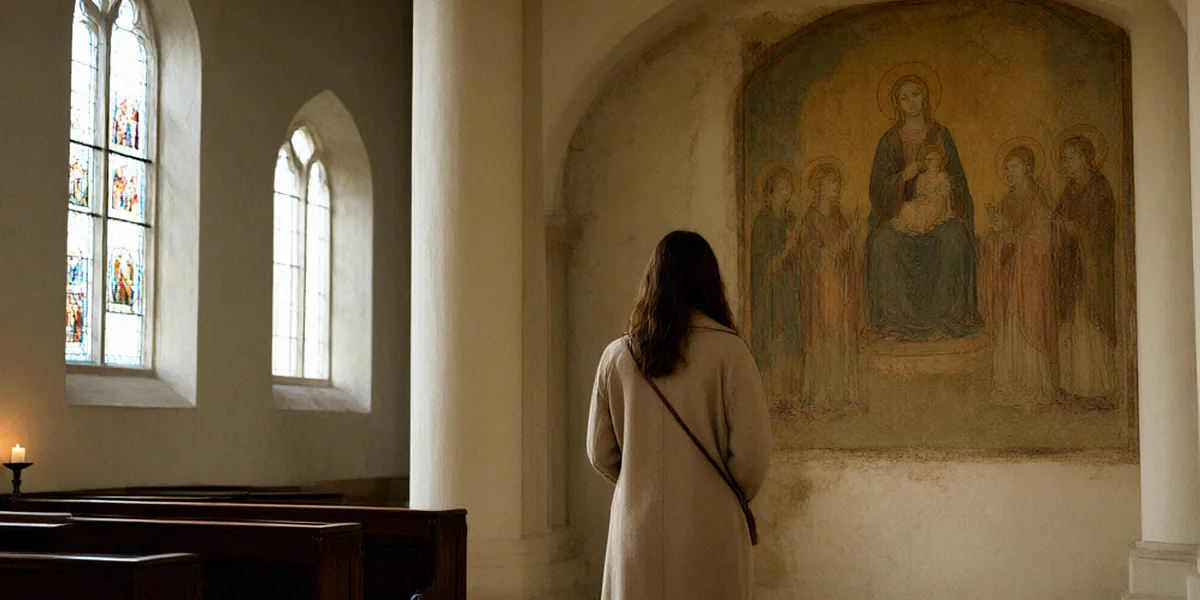
Most people associate church visiting with summer fetes and holiday afternoons. In practice, the opposite holds true for wall paintings. In July, bright overhead light flattens pigment and glare bounces off every surface. In January, the sun stays low, grazing the wall at an angle and picking out the faint red ochre and black outlines that survive from the fifteenth century. Add empty aisles, no coach parties and the occasional sound of rain on lead roofing, and you have ideal conditions for contemplative viewing.
The Science of Winter Light on Pigments
Medieval wall paintings were executed in earth pigments, chiefly red and yellow ochre, lime white and carbon black, bound in a lime medium and applied to dry plaster. Centuries of candle smoke, damp and later whitewash have left them muted. What reveals them is raking light: illumination arriving at a shallow angle so that subtle differences in texture and tone cast micro-shadows. The winter sun in southern England sits low in the sky for much of the day, producing precisely this effect through south and west windows. Mid-morning and early afternoon on a clear winter day are the golden windows, so to speak, for photography and close study.
Quiet Churches, Better Viewing
We have stood in Hampshire churches on August bank holidays with a dozen other visitors shuffling past the same stretch of wall. In February, you may have the whole building to yourself. That matters, because reading a faded Doom painting takes time: you need to let your eyes adjust, move slowly along the wall, and look again. Many Hampshire churches keep regular winter opening hours, often daily from around 9am to dusk, though some rural parishes lock up earlier in the cold months. The stillness also suits the reflective mood these paintings were made for. Medieval congregations read these images as warnings and promises; a hushed winter nave gets you closer to that original experience than a sunny summer crowd ever will.
Five Hampshire Churches with Remarkable Medieval Wall Paintings
Hampshire has a rich but fragile legacy of medieval church decoration. The five churches below are among the most rewarding, and all repay a winter visit.
St Mary’s, Bramshott: A Doom Painting Revealed
St Mary’s Church, Bramshott, near Liphook, has a rare medieval Doom painting rediscovered in the 20th century. The Doom, or Last Judgement, was the standard subject above the chancel arch: Christ in majesty, the saved led to heaven on his right, the damned tumbling to hell on his left. At Bramshott the painting survived beneath later coatings and now offers one of the clearest readings of this iconography in the county. Look for the weighing of souls and the demons hauling sinners away. It is a stark image, and winter light gives it an appropriately sober force.
St Peter’s, St Mary Bourne: Saints and Scrolls
St Peter’s in the village of St Mary Bourne preserves a scheme of medieval wall paintings including saints and scroll-bearing figures, the kind of didactic decoration that once covered most English parish churches. Scrolls were painted speech-bubbles carrying texts, often in Middle English, that told the viewer what each saint said or suffered. Much of the lettering has eroded, but the outlines of figures and the rhythm of the composition survive. Bring binoculars if you can; the upper walls reward magnification.
St John the Baptist, Winchester: Urban Survivors
St John the Baptist Church in Winchester city centre contains surviving medieval wall paintings, which is remarkable given the pressures of urban redevelopment around it. The church sits on St John’s Street, a short walk from the cathedral, and makes an easy addition to a city day out. Urban churches are often open reliably, so this is a good winter stop if rural opening hours prove unpredictable.
Two further churches complete our shortlist. At St Mary’s, Bramshott you also find consecration crosses, the small painted crosses that marked the twelve spots where a bishop anointed the walls at consecration. Elsewhere in the county, one Hampshire church retains a rare surviving rood screen painting: the painted figures on the tympanum above the screen, which most parishes lost at the Reformation. And the Churches Conservation Trust cares for several historic churches in Hampshire with medieval wall paintings, giving reliable access to buildings that might otherwise be locked. Check the Trust’s website for which of its Hampshire churches are open and when.
- St Mary’s, Bramshott — Doom painting and consecration crosses
- St Peter’s, St Mary Bourne — saints, scrolls and layered schemes
- St John the Baptist, Winchester — medieval paintings in a city-centre setting
- Churches Conservation Trust sites in Hampshire — reliable access to fragile interiors
- Rood screen painting — a rare survival at one Hampshire church
What to Look For: Reading Medieval Wall Paintings
These paintings are not murals in the modern sense. They are traces: fragments where the plaster has held, outlines where the pigment sank in, and ghostly colour where whitewash was later removed. Learning to read them is half the pleasure.
Common Subjects and Their Meanings
Most schemes follow a recognised iconography. The Seven Deadly Sins might appear as a wheel or a tree, each branch labelled with a vice. The Harrowing of Hell shows Christ descending to rescue the souls of the righteous before the Resurrection. St Christopher, patron of travellers, was painted large, often opposite the main door so that entering worshippers met his gaze. Consecration crosses mark the church’s dedication. Once you know the cast of characters, faded shapes resolve into narrative.
Tools for Seeing Faint Details
Our team’s practical advice: bring a small torch and hold it low, almost parallel to the wall, sweeping slowly sideways. The raking beam will catch texture and reveal figures invisible in flat light. Avoid shining light directly at the painting from close range. Binoculars help with upper walls. And remember the history: many medieval wall paintings in Hampshire were whitewashed during the Reformation and only uncovered in the Victorian era, so what you see is often a Victorian conservation layer as much as a medieval original. Treat every fragment as a document of two periods, not one.
Stained Glass and Romantic Piano Music: A Winter Pairing
Stained glass and Romantic piano music belong together. Both work through colour, drama and narrative, and both are at their most affecting in winter, when the light is low and the emotions are close to the surface.
Saint-Saëns and the Romantic Imagination
Camille Saint-Saëns wrote five piano concertos, and the second and fifth are the most frequently performed. Saint-Saëns’ Piano Concerto No. 2 in G minor is a staple of Romantic piano repertoire often performed in UK churches, partly because its scale suits modest venues and partly because its opening solo cadenza, brooding and improvisatory, sounds extraordinary in a stone acoustic. Listen to it before or after a visit and you will hear the same dramatic instincts that drive a Doom painting: judgement, mercy, spectacle. The Piano Concerto No. 5 in F major, with its evocations of Egypt and the East, offers a more exotic, glittering counterpart to the jewel colours of stained glass.
Winter Recitals in Hampshire Churches
Many Hampshire churches host winter recitals, often by local piano societies and music trusts, and a concert in a medieval nave is a genuinely different experience from a concert hall. Combine a morning spent studying wall paintings and stained glass with an afternoon or evening recital, and the two art forms illuminate each other. Romantic piano music echoes the narrative sweep of medieval art: both ask the listener or viewer to follow a story across time.
Planning Your Winter Visit: Practical Tips for Hampshire Churches
A little planning makes all the difference between a locked door and a memorable afternoon.
Access and Opening Hours
Check opening times before travelling. Many Hampshire churches are open daily, but some rural parishes lock in winter, and a few open only by keyholder arrangement. The Hampshire Medieval Churches Trust and the Churches Conservation Trust are the most reliable sources for access information; both publish church lists and contact details online. If a church is normally locked, the local benefice office or parish website will usually name a keyholder.
Etiquette and Preservation
These interiors are fragile. Follow a few simple rules:
- Do not touch the walls; skin oils and salts damage pigment and plaster.
- Use torches sparingly and never at close range; heat and light are both harmful over time.
- Keep flash photography off unless signage permits it.
- Respect closed areas and kneelers, and leave pews as you find them.
- Combine visits with a local pub lunch or a winter walk, but park considerately in village centres.
FAQ
Are Hampshire’s medieval wall paintings open to the public in winter?
Many are. Most parish churches are open daily during daylight hours, though some rural churches lock earlier in winter. Always check the parish website or the Hampshire Medieval Churches Trust listings before setting out.
What is a Doom painting and where can I see one in Hampshire?
A Doom painting depicts the Last Judgement, usually above the chancel arch. St Mary’s Church, Bramshott, has a rare medieval Doom painting rediscovered in the 20th century, and it is well worth the trip.
Why were so many medieval wall paintings whitewashed?
Many medieval wall paintings in Hampshire were whitewashed during the Reformation and only uncovered in the Victorian era. The whitewash preserved much of the pigment beneath, which is why fragments survive today.
Can I listen to Saint-Saëns while visiting?
Yes, and we recommend it. Saint-Saëns’ Piano Concerto No. 2 in G minor is a staple of Romantic piano repertoire often performed in UK churches. Listen before your visit, or look out for a winter recital in a Hampshire church.
Which organisations can help me plan access?
The Churches Conservation Trust cares for several historic churches in Hampshire with medieval wall paintings, and the Hampshire Medieval Churches Trust is an excellent starting point for opening times and keyholder contacts.
Winter offers a unique, contemplative way to engage with Hampshire’s medieval wall paintings and Romantic piano music. The cold light reveals what summer hides, the empty naves allow unhurried looking, and a Saint-Saëns concerto in a stone acoustic completes the picture. Plan a visit before the season ends, and take a torch, binoculars and a little patience.

Post Comment
You must be logged in to post a comment.