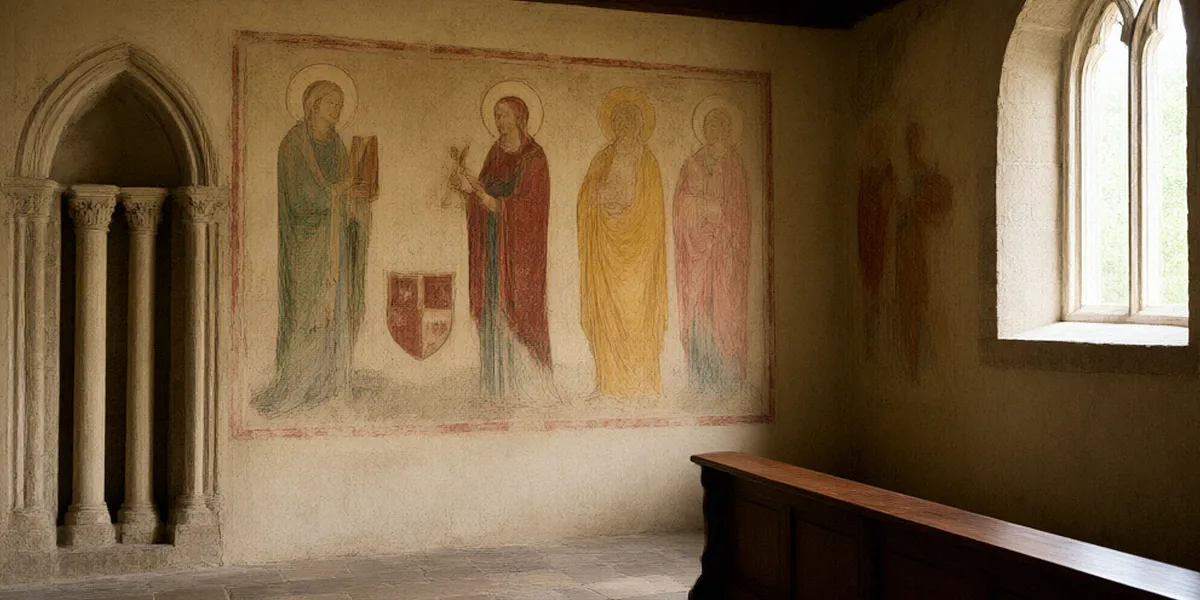
Medieval Wall Paintings in Hampshire Churches
We still remember the first time we stepped into a dimly lit Hampshire parish church and caught sight of a faded doom painting emerging from the shadows of the nave wall. The colours were muted, the figures ghostly, but the sheer age of the thing — centuries of worship, upheaval and quiet survival — stopped us in our tracks. That moment sparked an obsession that has taken us across the county, from grand minsters to remote downland chapels, in search of England’s most underappreciated medieval art.
Why Hampshire’s Medieval Wall Paintings Matter
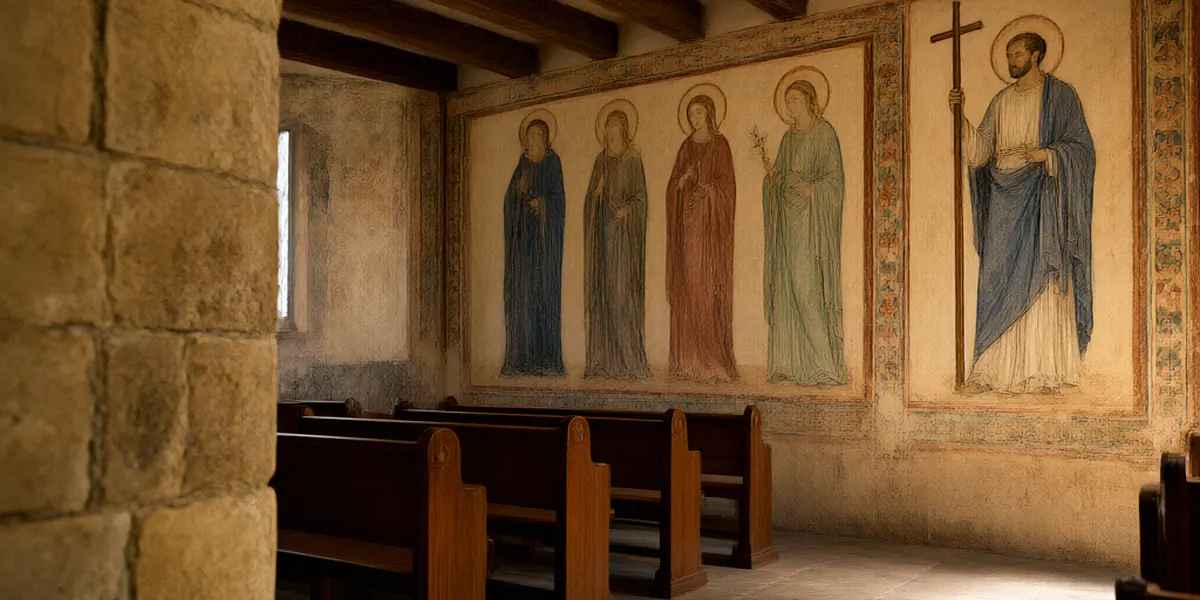
Before the Reformation, the interiors of English parish churches were alive with colour. Walls were plastered and painted with scenes from scripture, morality tales and the lives of saints, functioning as a visual Bible for congregations who could not read. Hampshire, with its dense cluster of rural parishes and its relative distance from the great monastic centres, preserves an unusually rich sample of this lost world.
The survival of these paintings is largely accidental. Under Edward VI, royal injunctions of 1547 ordered the removal of all images from churches, and wall paintings were scrubbed, limewashed or chipped away. What the reformers could not easily destroy, later generations simply painted over. For two or three centuries, whitewash and plaster sealed the medieval schemes beneath layers of Protestant plainness — until Victorian restorers and twentieth-century conservators began peeling back the layers.
The Reformation and the Whitewash Cover-Up
It is worth pausing on the irony: the very campaign that sought to erase Catholic imagery is the reason we can still see it today. Where reformers scraped aggressively, almost nothing remains. Where they took the cheaper route and limewashed over the walls, the pigment beneath was often protected from light, damp and air. Parishes that could not afford thorough destruction inadvertently became custodians of their own medieval heritage.
Hampshire’s Unique Survival Rate
Hampshire’s rural economy worked in the paintings’ favour. Many parish churches were small, poor and remote, with congregations who had neither the funds nor the enthusiasm to fully reform their interiors. The Test Valley in particular, with its scattered farming communities and modest flint-and-stone churches, retains an exceptional concentration of medieval schemes, often discovered only in the twentieth century during repair work.
Where to Find the Best Examples in the Test Valley
If you are new to Hampshire’s wall paintings, the Test Valley is the place to start. Two churches in particular have become fixtures on our regular itinerary.
St Mary’s, Broughton: A Doom Painting Revealed
St Mary’s Church, Broughton, sits at the heart of a village just north of Stockbridge, and its greatest treasure was hidden for centuries. When restoration work in the nineteenth century stripped away layers of plaster, a substantial doom painting emerged on the north wall of the nave — Christ in majesty, the saved ascending, the damned tumbling into hell-mouth. The figures are worn, but the composition is unmistakable, and the sheer scale of the scheme gives a vivid sense of how overwhelming it must have been for a medieval congregation.
St Peter’s, Stockbridge: Saints and Scrolls
Down the road, St Peter’s Church, Stockbridge, offers a different experience. Here the surviving paintings include figures of saints accompanied by scrolls bearing fragments of text, a reminder that these images were never purely decorative — they carried words, doctrine and warnings. The church itself is a delight, with Norman origins and a position right on the High Street, making it an easy stop on any Test Valley church crawl.
Reading the Stories: Common Themes and Iconography
Once you have seen a few schemes, patterns begin to emerge. Medieval wall paintings were not random; they followed established iconographic programmes designed to teach, warn and comfort.
The Seven Deadly Sins and Moral Lessons
The Seven Deadly Sins were a favourite subject, often depicted as a wheel or tree with Pride at the root and the other sins branching out. These images were designed to be memorable and slightly unsettling — a visual nudge toward confession and amendment of life. For a congregation who heard sermons in Latin or watched mystery plays in the churchyard, such paintings reinforced the moral teaching of the liturgy.
St Christopher and the Protective Power of Images
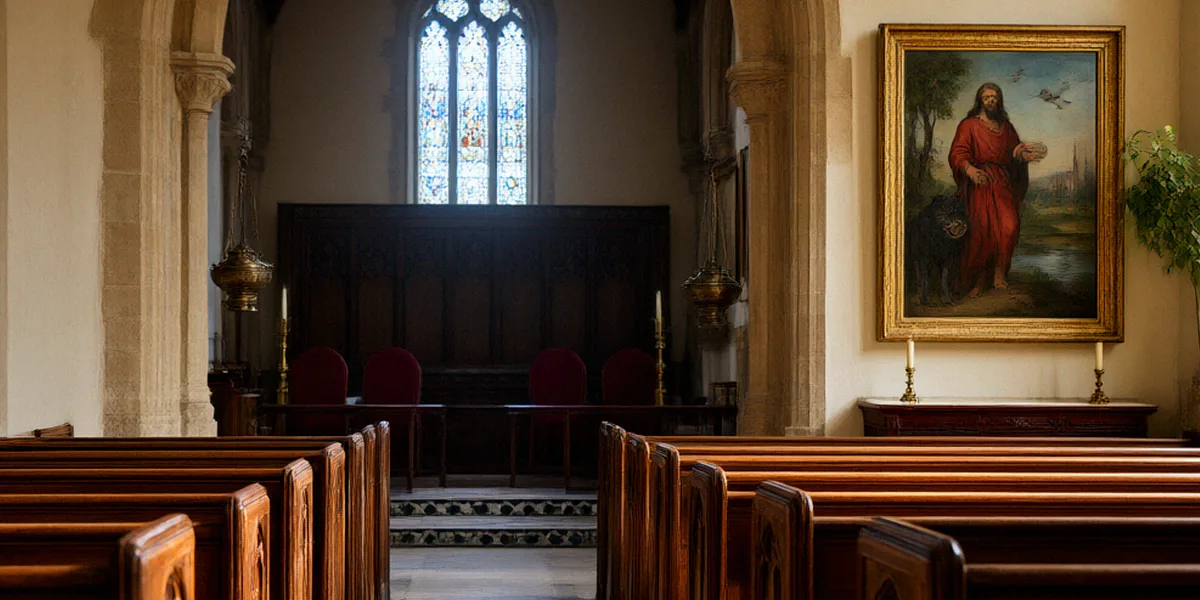
St Christopher was the most frequently painted saint in English churches, usually placed opposite the main door so that parishioners would see him on entering and leaving. Tradition held that anyone who looked upon his image that day would not die a sudden death. In an age of plague, childbirth and accident, that promise carried real weight. Several Hampshire churches retain fragments of Christopher, often reduced to a staff, a halo or the Christ child on his shoulder.
Stained Glass and Wall Paintings: A Medieval Partnership
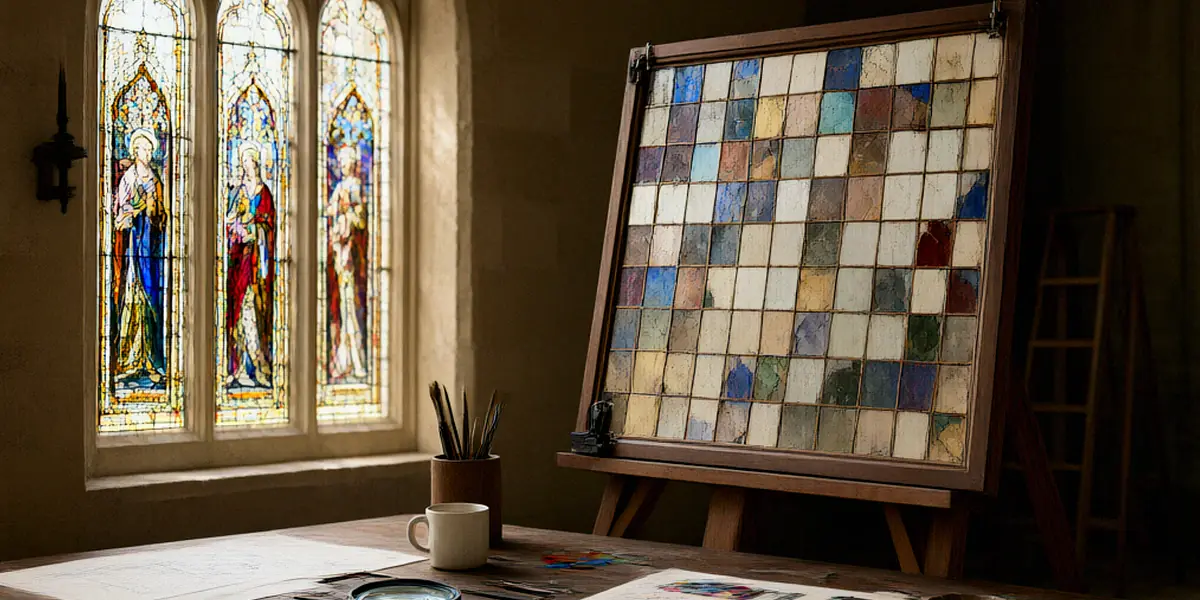
We tend to study stained glass and wall paintings separately, but in a medieval church they worked as a single visual scheme. Glass filled the windows with coloured light; paintings covered the walls with narrative. Together they told one continuous story.
Colour and Light: The Original Impact
Imagine a church interior where every surface was painted, where the windows glowed with reds, blues and golds, and where the rood screen was itself a riot of colour. The effect was immersive, closer to a modern installation than to the whitewashed austerity we now associate with old churches. Light streaming through stained glass would fall onto painted walls, so that figures on the glass and figures on the plaster seemed to converse.
Surviving Combinations in Hampshire
Where both media survive in the same building, the result is particularly special. St Michael’s Church, Winchester, is a fine example, with medieval glass and painted decoration that together give a rare glimpse of the original polychrome interior. It is one of the best places in the county to understand how these two art forms were meant to be read together.
Conservation and How to Visit Responsibly
These paintings are extraordinarily fragile. Pigment that has survived five centuries of neglect can be damaged in seconds by careless behaviour, and many of the churches that hold them are maintained by small congregations with limited funds.
Planning Your Visit: Opening Times and Access
Rural churches often keep unpredictable hours. Before setting out, we recommend:
- Checking parish websites or the Churches Conservation Trust listings for current opening times
- Looking for keyholder information posted at the church door if it is normally locked
- Contacting the parish in advance for out-of-hours access, especially for group visits
- Combining several churches into a single day to make the journey worthwhile
Etiquette for Protecting Delicate Surfaces
Once inside, a few simple habits make a real difference. Never use flash photography, as repeated light exposure fades pigment. Do not touch the walls, even lightly, and keep bags and coats clear of painted surfaces. If you notice damp, flaking or damage, report it to the parish or to the Churches Conservation Trust rather than attempting any cleaning yourself. Membership or donations to conservation bodies directly support the work of stabilising these schemes for the next generation.
Our Favourite Underrated Hampshire Churches
Beyond the well-known sites, we have a soft spot for the churches that rarely make the guidebooks.
St Mary’s, Ashley: A Hidden Gem
St Mary’s Church in Ashley is a small, peaceful building tucked away in the Test Valley, and its surviving wall paintings reward anyone willing to seek it out. The scale is intimate rather than grand, which makes the medieval work feel unusually immediate.
St John the Baptist, Upper Eldon: Fragments with Charm
St John the Baptist at Upper Eldon offers something different again: not a complete scheme, but tantalising fragments that hint at what once covered the walls. For enthusiasts, these partial survivals are often more evocative than a fully restored painting, because they force you to imagine the rest.
FAQ
What are medieval wall paintings and why were they made?
They were painted schemes applied to the plastered walls of churches during the Middle Ages, usually depicting biblical scenes, saints or moral lessons. Their purpose was to teach an largely illiterate congregation the essentials of Christian faith and behaviour.
Why do so many Hampshire churches still have wall paintings?
Many were covered with limewash during the Reformation rather than being scraped away, which inadvertently protected the pigment. Hampshire’s rural parishes, especially in the Test Valley, were often too poor or remote to carry out thorough destruction, so more survived here than in wealthier or more rigorously reformed areas.
Can I photograph medieval wall paintings in churches?
Generally yes, but without flash. Flash photography accelerates fading, and some churches ask visitors not to photograph at all. Always check signage and follow the parish’s instructions.
How can I support the conservation of these paintings?
Donate to the parish or to the Churches Conservation Trust, become a member, attend fundraising events, and visit responsibly. Simply showing up and demonstrating that these buildings matter helps make the case for continued funding.
Which Hampshire church should I visit first?
For a first visit, we suggest St Mary’s Church, Broughton, for its doom painting, followed by St Peter’s Church, Stockbridge, for its saints and scrolls. Both sit in the Test Valley and can easily be seen in a single afternoon.
Every one of these paintings is a survivor — of reform, neglect, damp and time. By seeking them out, visiting with care and supporting the bodies that look after them, we all play a small part in keeping Hampshire’s medieval heritage alive for the generations who will come looking after us.

Post Comment