Christmas Carol Services in Hampshire’s Historic Village Churches
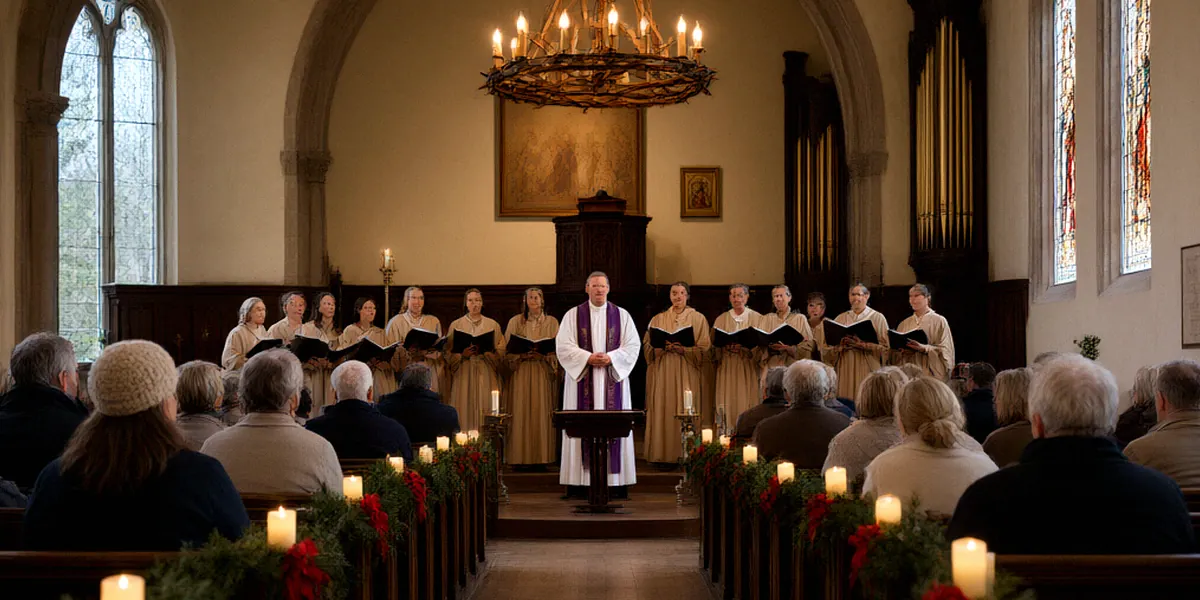
The candle flames tremble against stone that was laid before the Norman Conquest. Somewhere behind you, a medieval wall painting fades in and out of the shadows, and the first verse of “Once in Royal David’s City” rises from a nave that holds perhaps eighty people at most. This is Christmas in a Hampshire village church, and it is an experience no cathedral, however magnificent, can quite replicate. Cathedrals give you scale and spectacle; a village church gives you intimacy, history at arm’s length, and the sense that you are singing where generations of Hampshire families have sung before you. In this guide, we look at why these services matter, which ones are worth travelling for, and how the music — from plainchant to Saint-Saëns — makes them unforgettable.
Why Hampshire’s Village Churches Are Special at Christmas
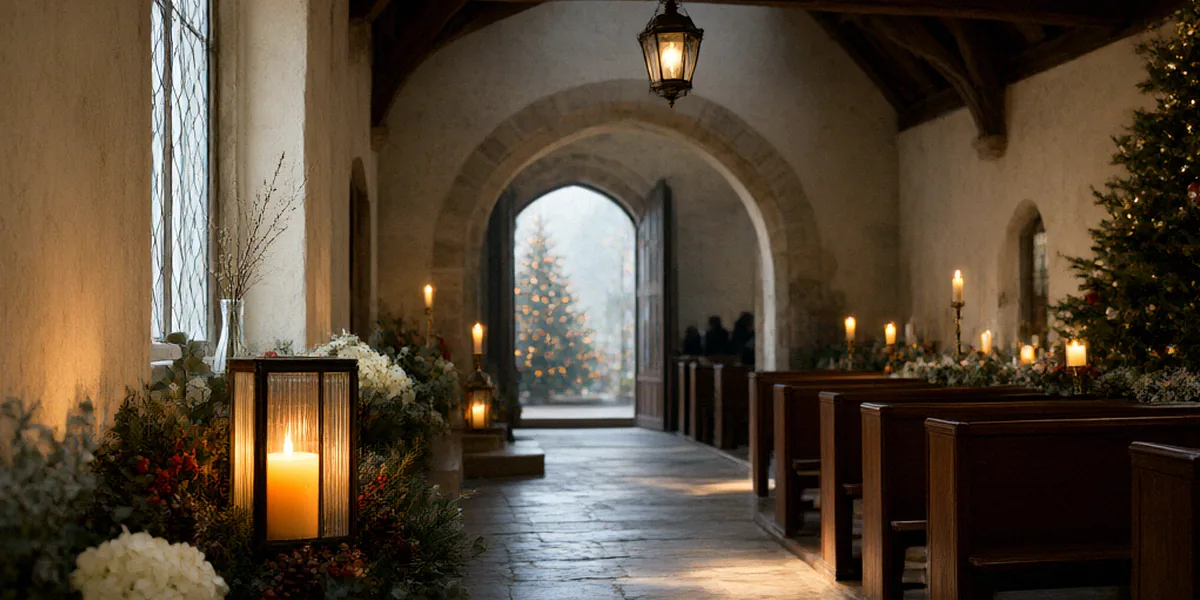
Hampshire has an extraordinary density of medieval parish churches, many of them Grade I listed, and most of them still in regular use. At Christmas, that ancient fabric becomes the setting for something quietly magical. Churches such as St Mary’s in Buriton, tucked beneath the South Downs, and St Peter’s in Soberton, in the Meon Valley, seat congregations in the low dozens rather than the hundreds. That changes everything about how a carol service feels.
The intimacy of a village nave
In a village nave, you can hear the person next to you breathing between verses. The choir — often a handful of local singers rather than a professional foundation — stands only a few feet away. When the congregation joins in “Hark! The Herald Angels Sing”, the sound does not disappear into a vast vault; it wraps around you. Many of these churches also have warm, resonant acoustics thanks to their timber roofs and plastered walls, which flatter unaccompanied singing in a way that stone-heavy cathedrals simply cannot.
Medieval wall paintings and stained glass as seasonal backdrops
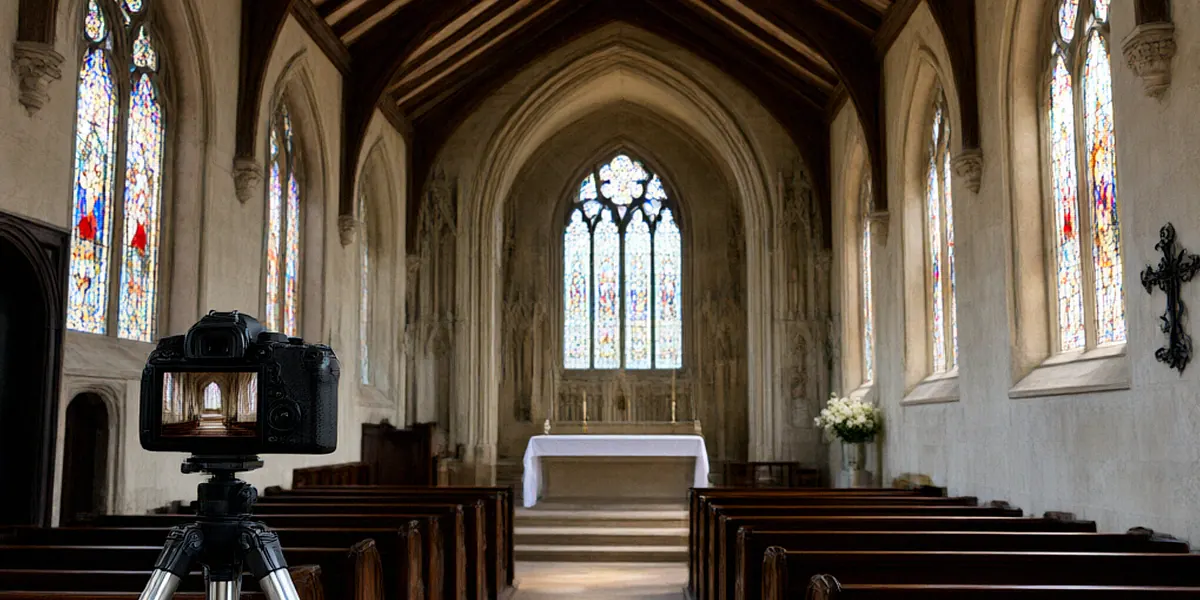
Hampshire’s churches are particularly rich in medieval wall paintings, many rediscovered under layers of whitewash during Victorian restorations. At Christmas, these fragments — a doom painting, a faded Annunciation, a wheel of fortune — take on a new resonance when lit by candles and Christmas tree lights. The same is true of the stained glass: a Nativity scene in a chancel window, backlit by a winter afternoon, becomes part of the service itself. Very few concert halls can offer that kind of backdrop.
Carol Services Worth Travelling For: Our Picks Across the County
Hampshire’s parishes hold dozens of carol services through December, and most are listed on parish websites and deanery newsletters. Here are three we return to year after year, each with a distinct character.
Selborne: carols in Gilbert White’s church
St Mary’s Church in Selborne is inseparable from the naturalist Gilbert White, whose Natural History of Selborne (1789) remains one of the most beloved books in the English language. White served as curate here, and his grave lies in the churchyard. The annual Festival of Nine Lessons and Carols at St Mary’s follows the familiar King’s College pattern — readings from Genesis to the Gospels, interspersed with choral and congregational carols — but in a setting of perhaps 150 seats. Check the parish website each November for the exact date and time, as it typically falls in mid-December.
Mottisfont and Twyford: candlelight and community
St Andrew’s Church at Mottisfont, on the edge of the National Trust estate, is known for its candlelit carol service — the building is lit almost entirely by candles, which transforms its Norman and medieval stonework into something luminous and otherworldly. Expect traditional carols, a short address, and mulled wine afterwards. Further east, St Mary’s in Twyford, near Winchester, holds a traditional service that draws a strong local choir and a genuinely community atmosphere. Dates vary by year, so confirm via the parish or the Winchester Diocese listings before you travel.
The Music: From Plainchant to Saint-Saëns
What surprises first-time visitors is the sheer musical range on offer. A Hampshire carol service might open with unaccompanied plainchant, move through a locally preserved carol variant, and close with a full organ voluntary. Increasingly, these churches also host Christmas concerts that step beyond the carol repertoire entirely.
Traditional carols and their local variants
Hampshire has its own carol-singing traditions, and some parishes preserve verses that never made it into the standard Carols for Choirs editions. You may hear “The Holly and the Ivy” sung to a slightly different harmonisation, or a Sussex-adjacent variant of “While Shepherds Watched” — the tune “Lyngham” is a particular favourite in the south. Unaccompanied singing, plainchant antiphons, and organ voluntaries by composers such as William Byrd and Charles Villiers Stanford all feature regularly.
Saint-Saëns and Romantic piano music in sacred spaces
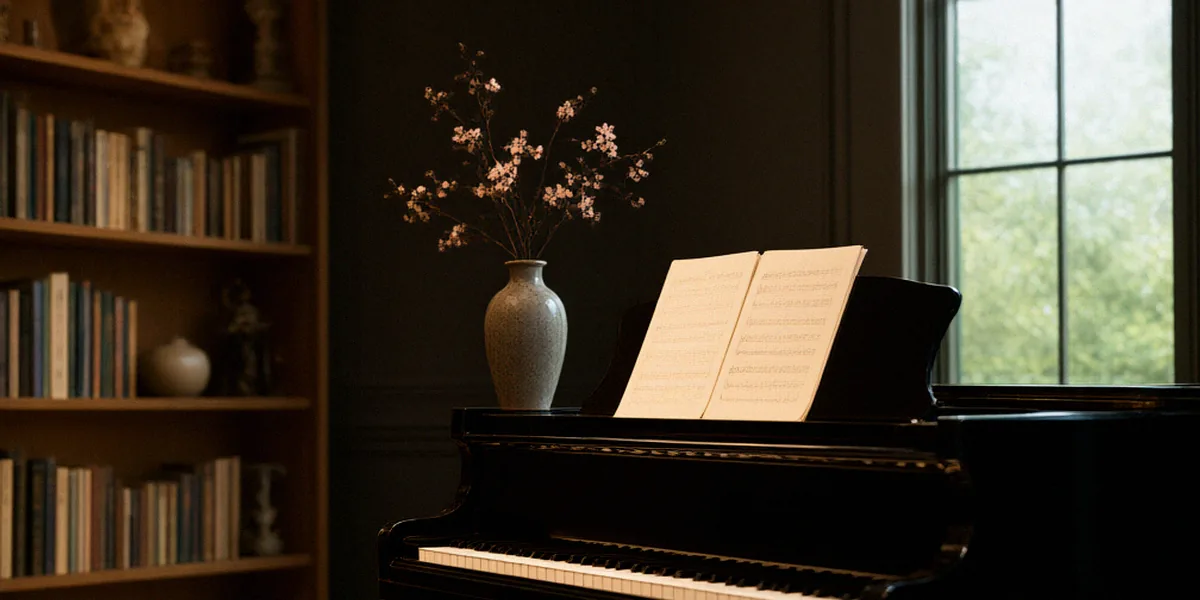
Romantic piano music has found an unexpected home in Hampshire’s churches. Christmas concerts in venues such as St Mary’s, Selborne and St Andrew’s, Mottisfont have programmed works including Saint-Saëns’ Piano Concerto No. 2 in G minor, Op. 22 — a piece that opens with a solo Bach-like cadenza before swelling into full Romantic drama. Hearing it in a medieval nave, with a chamber arrangement or a piano reduction, is a genuinely different experience from a concert hall. Other Romantic repertoire — Chopin nocturnes, Liszt consolations, Fauré — also appears in these fundraising concerts, bridging Hampshire’s heritage architecture with the nineteenth-century piano tradition.
How to Find and Enjoy a Carol Service in Hampshire
Finding a service is straightforward once you know where to look. Parish websites are the most reliable source, but diocesan and national tools are also useful.
Using parish and diocesan listings
Start with the Church of England’s Find a Church online tool, which lets you search by postcode or place name and links to individual parish pages. The Diocese of Winchester and the Diocese of Portsmouth both publish Advent and Christmas service listings each November. Local deanery newsletters — often distributed by email — frequently carry the most up-to-date details, including last-minute changes.
Etiquette and what to expect
- Arrive early: village churches fill quickly, and latecomers often stand at the back.
- Wrap up warm: medieval stone holds the cold, even with heating on.
- Join the singing: congregational carols are for everyone, not just the choir.
- Check parking: many villages have limited parking near the church; arrive on foot if you can.
- Bring cash for the collection, which usually supports the church fabric and local charities.
Preserving Heritage Through Christmas Tradition
Every ticket, donation, and collection plate at a Hampshire carol service contributes directly to the upkeep of buildings that are, in many cases, over 800 years old. The average medieval parish church costs tens of thousands of pounds a year to maintain — roofs, gutters, stonework, heating, and insurance all add up. Christmas services are one of the most important fundraising moments in the parish calendar.
The role of volunteers and friends groups
Most Hampshire churches are kept open by volunteers: flower arrangers, bell ringers, sidespeople, and the members of local friends groups who organise concerts and appeals. The Churches Conservation Trust looks after historic churches in Hampshire and across England, caring for buildings no longer in regular parish use. Supporting these organisations — by attending, donating, or joining — is one of the simplest ways to keep the county’s heritage alive.
How carol services fund urgent repairs
When a nave roof starts leaking or a stained glass window needs releading, the money usually comes from a mix of grants, local fundraising, and the Christmas collection. A well-attended carol service can raise several thousand pounds in a single evening. That is heritage preservation in its most direct and enjoyable form.
FAQ
When do Hampshire village carol services usually take place?
Most take place in the two weeks before Christmas, typically between 10 and 23 December. Many parishes hold a separate Christingle or midnight service on Christmas Eve. Check individual parish websites from late November for confirmed dates and times.
Do I need to book in advance?
For most village carol services, no — you can simply turn up. However, popular services such as the Festival of Nine Lessons and Carols at St Mary’s, Selborne, and the candlelit service at St Andrew’s, Mottisfont, can be full well before the start time, so arriving 20 to 30 minutes early is wise.
Is there an admission charge?
Almost never. Carol services are free and open to all. A retiring collection is normally taken, and donations go towards the church’s upkeep and local charities. Cash is helpful, though many churches now accept card or contactless giving.
Can I bring children?
Yes. Village carol services are family-friendly, and children are warmly welcomed. Some parishes run a separate Christingle or nativity service aimed specifically at younger families — check the parish listing for details.
How can I support a Hampshire church beyond attending?
You can join a local friends group, volunteer as a steward or flower arranger, donate to the Churches Conservation Trust, or simply make a one-off gift towards the fabric fund. Every contribution helps keep these medieval buildings open for the next generation of Christmas carol singers.
This Christmas, we would urge you to step inside a Hampshire village church — perhaps one you have driven past for years without stopping. Sing loudly, listen to the music, and let the candlelight do its work. In doing so, you are not just enjoying a carol service; you are helping carry centuries of heritage, music, and community into another year.

Post Comment
You must be logged in to post a comment.