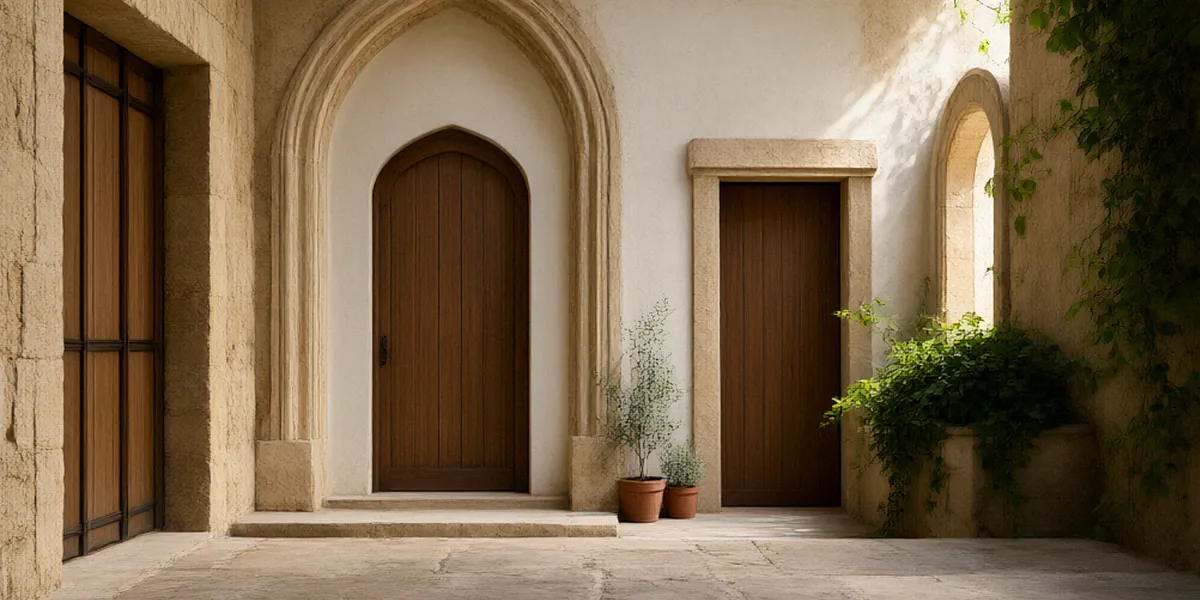
Norman Fonts and Doorways: Hampshire’s Romanesque Legacy
Push open a heavy Norman doorway and you feel the weight of nine centuries in your hands. Run your fingers along the chevron carving, trace the arc of a round arch, or lean over the lead-lined rim of a tub font worn smooth by generations of baptisms, and you are touching the earliest layers of Hampshire’s parish church heritage. The Normans arrived in England after 1066 and rebuilt the Church in stone on a scale the Anglo-Saxons had rarely attempted, leaving behind fonts and doorways that still anchor hundreds of village churches across the county. We have spent years visiting these buildings, notebook in hand, and in this post we invite you to join our exploration of Hampshire’s Romanesque legacy — the arches, tympana and carved fonts that survive as the most tangible reminders of the Conquest era.
Why Norman Fonts and Doorways Matter in Hampshire
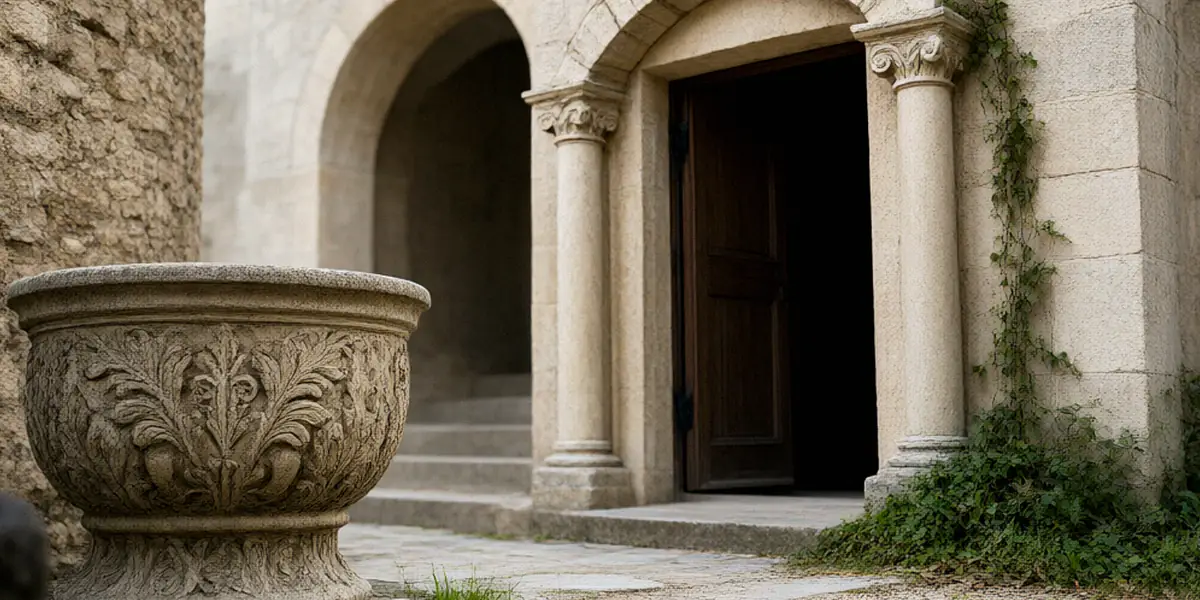
The Norman Conquest reshaped parish church architecture across England, and Hampshire sat at the heart of it. Winchester was a royal and ecclesiastical capital, and the great men who served the Norman kings — bishops, abbots and barons — endowed churches throughout the region. Between roughly 1070 and 1150, masons working in the Romanesque style rebuilt naves, chancels and towers in stone, and every church needed two things above all: a doorway to enter by and a font to baptise in. That is precisely why these two features survive in such numbers today.
The Norman Legacy in Parish Churches
Most Norman churches were later enlarged, reordered or rebuilt in the Gothic centuries, so complete Romanesque buildings are relatively rare. Doorways and fonts, however, were often retained even when everything around them changed — a doorway because it framed the main entrance, a font because it stood at the spiritual centre of the baptismal rite. The Test Valley is particularly rich in these survivals, with numerous Norman churches including St Andrew’s, Mottisfont, still preserving Romanesque work within later fabric.
Survival and Significance of Fonts and Doorways
These features matter because they are primary evidence. A chevron moulding or a carved tympanum tells us about the mason’s workshop, the patron’s wealth and the devotional fashion of the day. A font tells us where infants were brought for baptism, sometimes for centuries before and after the Norman period. Together, they form a physical thread running from the eleventh century to the present congregation.
Reading Norman Doorways: Architecture and Symbolism
Norman doorways follow a recognisable grammar, and once you learn it you will start reading churches almost without thinking. The round-headed arch is the signature, usually formed of nested orders of masonry that step inward toward the opening. Around these orders run the mouldings: chevron (zigzag), billet, cable and beakhead ornament, each with its own regional distribution and date range.
Common Features: Arches, Tympana, and Carvings
Above the door itself, many Norman entrances carry a tympanum — a semicircular panel filling the space between the lintel and the arch. Tympana often bear relief sculpture: a lamb, a cross, a figure of Christ in majesty, or geometric patterns whose meaning scholars still debate. Capitals at the springing of the arch may be carved with volutes, faces or beasts. The whole composition was intended to mark the threshold between the everyday world and the sacred space within.
Notable Doorways in Hampshire
Hampshire offers several doorways worth a dedicated journey. St Mary’s Church, Breamore, has a well-preserved Norman doorway with a rare Anglo-Saxon inscription, a reminder that Norman masons sometimes built on Anglo-Saxon foundations. St Peter’s Church, Stockbridge, features a Norman doorway with chevron ornament that rewards close looking. Elsewhere in the county you will find beakhead and billet mouldings on village churches that rarely appear in guidebooks but are documented in detail by the Corpus of Romanesque Sculpture in Britain and Ireland (CRSBI).
Norman Fonts: Shapes, Styles, and Stories
If doorways mark the entrance to the church, fonts mark the entrance to the Christian life, and the Normans gave them monumental form. Many Hampshire fonts are cut from a single block of stone, sometimes lead-lined, and their sheer weight explains why so many survived later rebuilding: moving them was simply too much trouble.
Typology of Norman Fonts
Norman fonts generally fall into a few recognisable types:
- Tub fonts — cylindrical, often decorated with arcading, and the most common form in Hampshire.
- Square fonts — plain or lightly moulded, sometimes with corner shafts.
- Cushion fonts — tapering to a narrower base, named for their resemblance to a cushion.
- Fonts with figurative carving — rare, but where they survive they may show apostles, beasts or geometric interlace.
The Norman font at St Mary’s, Twyford, is a fine example of a tub font with arcading, its blind arches circling the bowl in a rhythm that echoes the doorways described above.
Where to See Exceptional Fonts in Hampshire
Beyond Twyford, the Test Valley rewards font-hunters. St Andrew’s, Mottisfont, preserves Norman work in a setting of later medieval and Victorian additions, and several neighbouring parishes hold fonts of similar date and type. We recommend keeping a simple sketchbook: noting the profile of the bowl, the depth of the lead lining and the style of any arcading will quickly teach you to date a font by eye.
Preservation and Discovery: Our Field Notes
Our own visits have taught us that Norman features survive despite, not because of, the odds. Weathering attacks the soft limestone and chalk so common in Hampshire, and Victorian restorations — however well intentioned — sometimes scraped or replaced medieval surfaces. We have stood in churchyards noting a doorway whose chevron has softened to a faint ripple, and inside, a font whose carvings have been worn almost smooth by three centuries of hands.
Conservation Challenges
Conservation is a balance. Doorways exposed to prevailing weather need shelter and careful pointing; fonts need protection from salt, damp and clumsy cleaning. Churchwardens and diocesan advisers do remarkable work with limited funds, and the Test Valley’s numerous Norman churches each present their own problems of access, heating and fabric repair.
Resources for Further Study
For anyone wanting to go deeper, the Corpus of Romanesque Sculpture in Britain and Ireland (CRSBI) documents many Hampshire examples with photographs and descriptions, and it is an invaluable starting point. County archaeological journals, church guides and the records of the Churches Conservation Trust will fill in the local detail.
Planning Your Own Norman Heritage Trail
The pleasure of Norman fonts and doorways is that they are scattered across the landscape, usually in small villages where a church has stood for a thousand years. A little planning turns a Sunday drive into a genuine heritage trail.
Suggested Itineraries
A Test Valley route might begin at St Peter’s, Stockbridge, with its chevron doorway, continue to St Mary’s, Twyford, for the tub font with arcading, and finish at St Andrew’s, Mottisfont, where Norman work sits alongside later medieval fabric. Add Breamore if you can, for the doorway with its rare Anglo-Saxon inscription. Allow twenty to thirty minutes per church, and check opening times in advance.
Visitor Etiquette and Access
These are active places of worship, not museums. We always:
- Check whether the church is open or whether a keyholder must be contacted.
- Avoid visiting during services, weddings or funerals.
- Leave nothing behind and take nothing away — no rubbings of fragile carvings without permission.
- Give a donation where requested, since upkeep depends on it.
Spring and early autumn are the best times to visit: good light through clear windows, and churchyards at their most welcoming.
FAQ
What is the difference between a Norman and a Romanesque doorway?
They describe the same thing. Romanesque is the broader European term for the style; Norman is the name used in England and Normandy for the Romanesque architecture introduced after the Conquest of 1066.
Why do so many Norman fonts survive when the churches around them were rebuilt?
Fonts were essential to the sacrament of baptism, were often cut from a single heavy block of stone, and were expensive to replace. Churches tended to keep them even when naves, chancels and towers were rebuilt in later styles.
Where can I see a Norman doorway with chevron ornament in Hampshire?
St Peter’s Church, Stockbridge, is a good example, and St Mary’s, Breamore, preserves a notable Norman doorway with a rare Anglo-Saxon inscription.
What is the Corpus of Romanesque Sculpture?
The Corpus of Romanesque Sculpture in Britain and Ireland (CRSBI) is an online scholarly record of Romanesque sculpture, documenting many Hampshire examples with photographs and descriptions. It is an excellent resource for planning visits.
Are these churches free to visit?
Most parish churches are free to enter, though many welcome donations for upkeep. Some are kept locked outside service times, so it is worth checking locally or contacting the parish before travelling.
Norman fonts and doorways are not merely architectural relics to be ticked off a list. They are living links to Hampshire’s medieval past — thresholds that villagers have crossed for nine hundred years and bowls that have held the water of baptism for generation after generation. We hope this guide encourages you to seek them out, to look closely at the chevron, the arcading and the worn stone, and to support the parishes and conservation bodies working to keep them standing for the centuries to come.

Post Comment