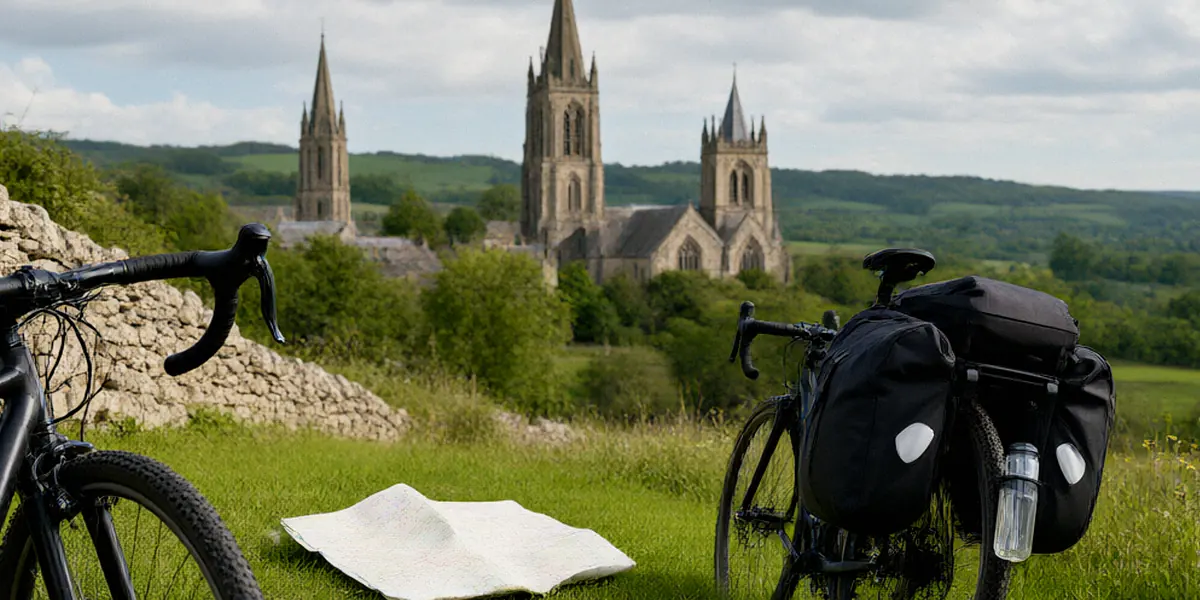
Planning a Church Crawl by Bike: A Two-Wheeled Pilgrimage Through Hampshire’s Parish Churches
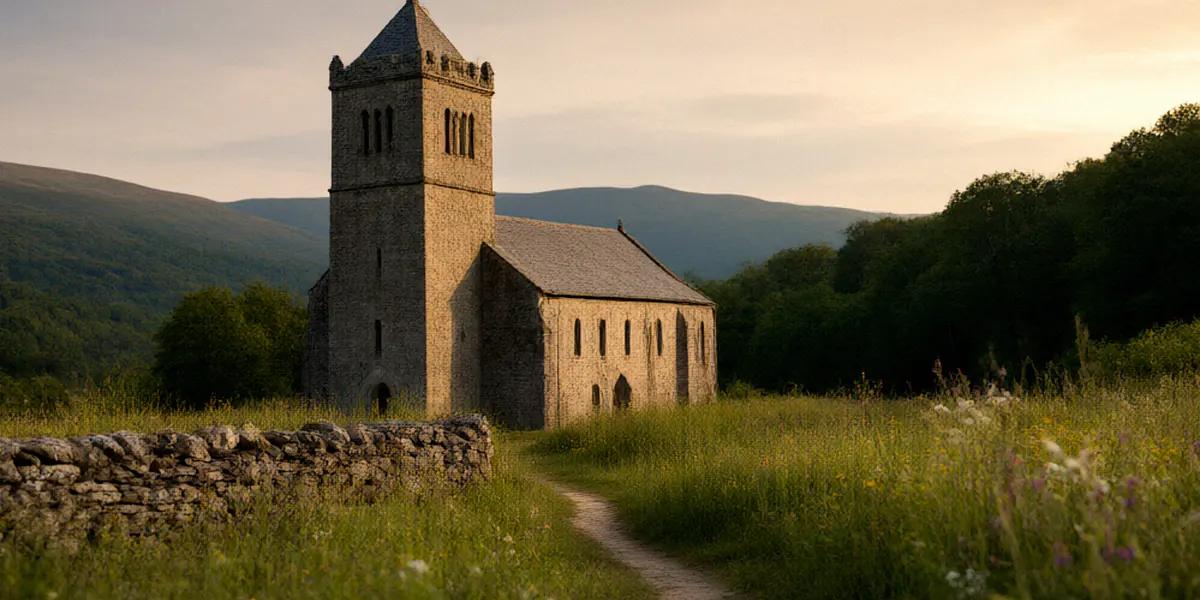
There’s something irresistible about the idea of pedalling gently between ancient church doors, freewheeling down a hedge-lined lane with a Norman tower rising ahead of you. The reality is just as good, provided you do a bit of homework first. Church opening times vary wildly, some buildings sit at the top of a proper hill, and the pub you’d earmarked for lunch might be shut on a Tuesday. But get it right and a Hampshire church crawl by bike becomes the best way we know to spend a day: quiet lanes, cool stone interiors, and the genuine thrill of pushing open a heavy door to find medieval wall paintings glowing faintly in a Test Valley village you’d never otherwise have stopped in.
Why Combine Cycling with a Hampshire Church Crawl?
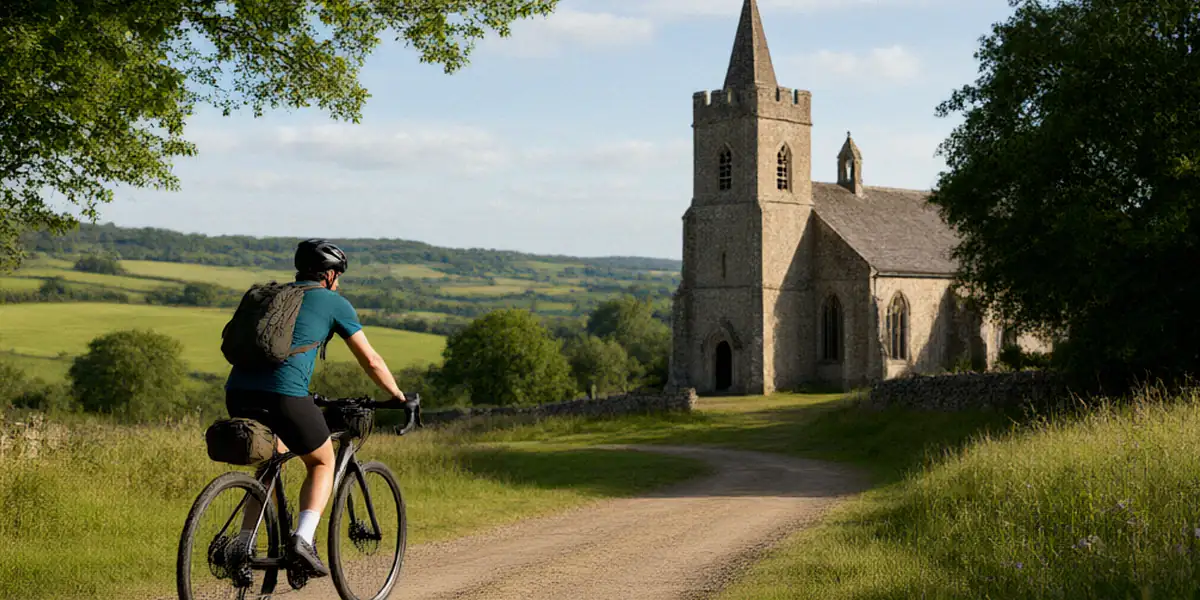
Hampshire is unusually well suited to this. The county has hundreds of parish churches, many of them medieval, and they cluster in a way that rewards slow, ground-level travel. A car gets you there too quickly and parks you at the door; walking limits how many you can reach in a day. A bike sits in the sweet spot — fast enough to link five or six churches, slow enough that you notice the change in flint and stonework between one village and the next.
The Slow Travel Advantage for Church Architecture
Approaching a church by bike changes how you read it. You see the tower from a mile off across a field, then watch it disappear behind trees, then reappear as you climb. By the time you reach the porch you’ve already absorbed the setting — the yew tree, the raised churchyard, the way the building sits in relation to the village. That context matters when you’re trying to understand why a particular church was built where it was. It also means you arrive unhurried, which is exactly the frame of mind for spotting a faded 14th-century wall painting that a quick visit would miss entirely.
Test Valley: A Cyclist’s Paradise for Parish Churches
The Test Valley is our favourite starting point. The terrain is largely gentle, the lanes are quiet, and the density of medieval churches is remarkable. Within a ten-mile radius you can find Norman doorways, Perpendicular towers, and some genuinely surprising interior decoration. The River Test itself provides a natural spine for a route, with villages strung along it and bridleways linking the ridges above. If you’re new to cycling church crawls, start here.
Choosing Your Route: From Test Valley to the South Downs
Good route planning comes down to three variables: distance, church density, and where you’ll eat. We usually aim for 20–30 miles with four or five churches, which leaves time to actually look at things rather than just ticking off buildings. A route that passes six churches but gives you ten minutes in each is worse than one that passes three and lets you linger.
Two churches we always try to include are St Mary’s Church, Broughton — a wonderfully atmospheric building with a Norman nave and some fine later additions — and St Peter’s Church, Stockbridge, sitting right in the middle of that handsome Georgian town. Both are easy to link via quiet lanes, and both reward a proper look rather than a quick peek.
Mapping Medieval Wall Paintings and Stained Glass
Before you set off, note which churches on your route are known for specific features. Wall paintings survive best in churches that escaped Victorian restoration, and stained glass is often concentrated in larger churches or those with wealthy medieval patrons. A little research beforehand means you know which windows to head for and which walls to examine with a torch.
Using National Cycle Network Routes in Hampshire
National Cycle Network Route 24 runs through this part of Hampshire and is a useful backbone for church crawl routes. It links Salisbury, Stockbridge, and Winchester via quiet roads and traffic-free sections, passing close to a number of churches. You don’t have to follow it slavishly — we often use it for the tricky bits and then divert onto lanes to reach a specific churchyard.
What to Look For Inside Hampshire’s Parish Churches
Once you’re inside, it helps to know what you’re looking at. Hampshire’s churches are full of survivals that are easy to walk past if you don’t know they’re there.
Spotting Medieval Wall Paintings
Medieval wall paintings are often faint — limewash, candle smoke, and centuries of damp have taken their toll. Look on the north wall of the nave, above arches, and around doorways, where figures and patterns most often survive. The Doom painting at St Mary’s, Ashley is a superb example of what to look for: a Last Judgement scene that rewards patient examination. Bring a small torch and use it at an angle to the wall; raking light reveals far more than direct light.
Reading Stained Glass Windows
Stained glass tells you about donors, saints, and local devotion. Look at the east window first, then the south aisle, which usually gets the best light. The glass at St Michael’s, Winchester is worth studying closely for its colour and detail. Note the difference between medieval glass, which is often fragmentary and reset, and Victorian glass, which tends to be more pictorial and confident.
Architectural Highlights: Norman Fonts to Perpendicular Towers
Beyond paintings and glass, keep an eye out for:
- Norman fonts — often square, heavily carved, and dating to the 12th century
- Perpendicular towers — tall, square, and typically 15th century
- Rood stairs and screen openings, remnants of pre-Reformation worship
- Wall monuments and brasses, which often record local families
- Graffiti and mason’s marks, sometimes medieval, sometimes later
Practical Tips for a Successful Church Crawl by Bike
The difference between a brilliant day and a frustrating one usually comes down to preparation. Churches are not visitor attractions with fixed opening hours, and treating them as such leads to disappointment.
Opening Times and Access: What We’ve Learned
Many Hampshire churches are locked except during services, though an increasing number are open daily during daylight hours. Check individual parish websites or the Churches Conservation Trust listings for the churches it cares for, which are generally open. The Hampshire and Islands Historic Churches Trust is another useful resource, and its annual sponsored ride is a great introduction to the whole idea. If a church is locked, don’t be disheartened — note the keyholder information often posted by the door, or simply enjoy the exterior and move on.
What to Pack: Tools, Layers, and a Good Lock
Our standard kit for a church crawl by bike:
- Puncture repair kit, spare tube, and a small pump
- A lightweight lock — you’ll be leaving the bike outside churchyards
- A small torch for examining wall paintings
- Waterproof layer and warm mid-layer; stone churches are cold even in summer
- Binoculars for reading distant glass and tower details
- Cash for donations, church guides, and tea stops
Etiquette and Respect in Active Parish Churches
These are living places of worship, not museums. Keep voices low, don’t walk through areas set aside for prayer, and check before photographing with flash — it damages some pigments and glass. If a service or funeral is taking place, quietly leave and come back another time. Donations for maintenance are always welcome and genuinely make a difference.
Our Favourite Hampshire Church Crawl Itineraries
Here are two routes we return to again and again, one short and one longer.
Short Loop: Test Valley Three-Church Ride
A gentle 15-mile loop from Stockbridge, taking in St Peter’s Church, Stockbridge, then north through the lanes to King’s Somborne, and on to Houghton before returning along the Test. Flat, quiet, and ideal for a first attempt or a half-day outing.
Longer Ride: South Downs and Wall Painting Trail
A 30-mile ride linking four churches, including Chilbolton and St Mary’s Church, Broughton, with a stretch on National Cycle Network Route 24. This one has a couple of proper climbs, so allow a full day and plan a pub stop in the middle.
FAQ
Do I need to book to visit Hampshire’s parish churches?
No, but you should check opening times in advance. Many are open daily during daylight hours, while others are locked except for services. Parish websites and the Churches Conservation Trust are the best places to check.
What’s the best time of year for a church crawl by bike?
Late spring and early autumn are ideal — long daylight hours, manageable weather, and fewer visitors. Summer is fine but churches can be busy with weddings, and winter light makes wall paintings hard to see.
Are the routes suitable for all bikes?
Mostly yes. The Test Valley loops suit any bike, including hybrids and tourers. The longer South Downs routes include rougher surfaces and climbs, so wider tyres and lower gears are an advantage.
Can I photograph medieval wall paintings?
Usually yes, but always without flash, which can damage pigments. Check for signage and ask if a volunteer is present. Some churches ask that you don’t photograph during services.
Where can I find out about churches cared for by the Churches Conservation Trust?
The Trust’s website lists all its churches with opening information. Several are in Hampshire and make excellent additions to a cycling route.
A church crawl by bike is really about the day as a whole — the lanes, the weather, the tea stop, the chance conversation with a churchwarden who tells you about a painting you’d otherwise have missed. The buildings are extraordinary, but so is the journey between them. We’d love to hear about your own Hampshire discoveries, so do get in touch and tell us which church stopped you in your tracks.

Post Comment