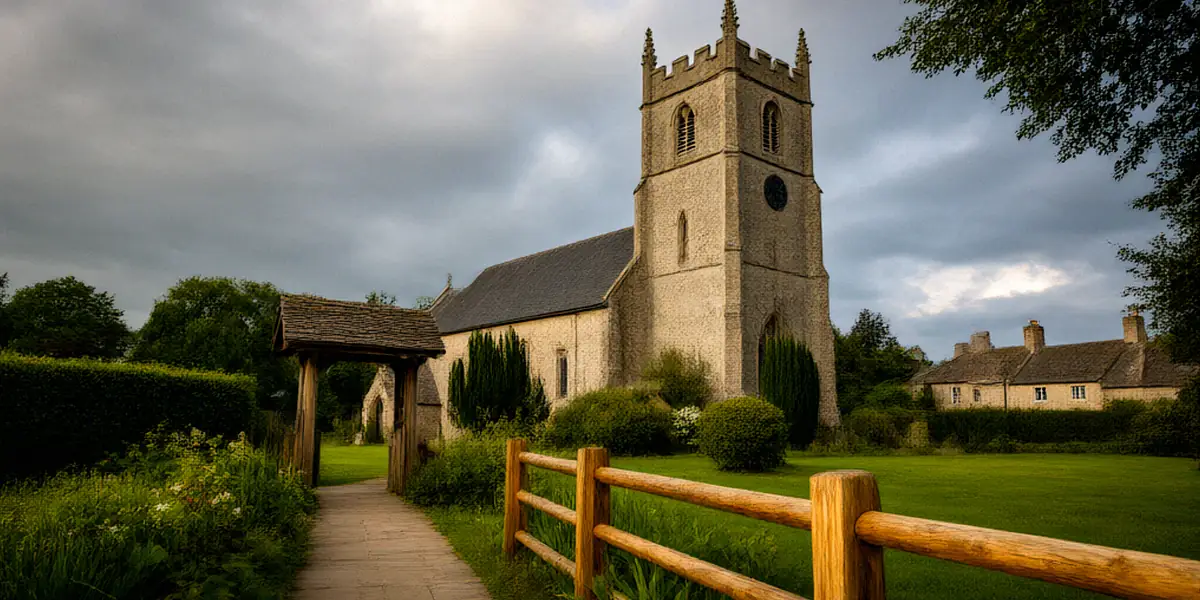
Little Somborne All Saints: A Visit to a Quiet Hampshire Church
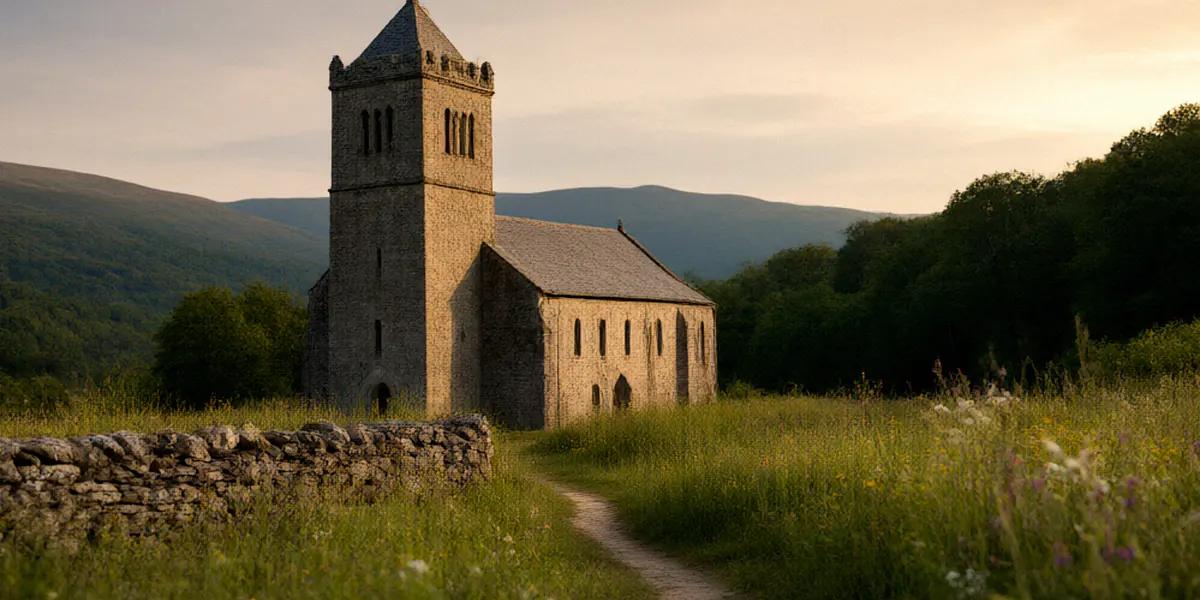
We come to Little Somborne along a lane that narrows between hedgerows, past a farm and a scatter of cottages, until the church of All Saints appears almost alone among fields and old yews. There is no village green, no shop, no pub — just the church, its churchyard, and the quiet of the Test Valley. On the day we visited, the only sounds were rooks in the tall trees and the wind moving through the yew branches. It is exactly the kind of Hampshire church that rewards a slow visit rather than a hurried glance.
Finding All Saints in the Test Valley
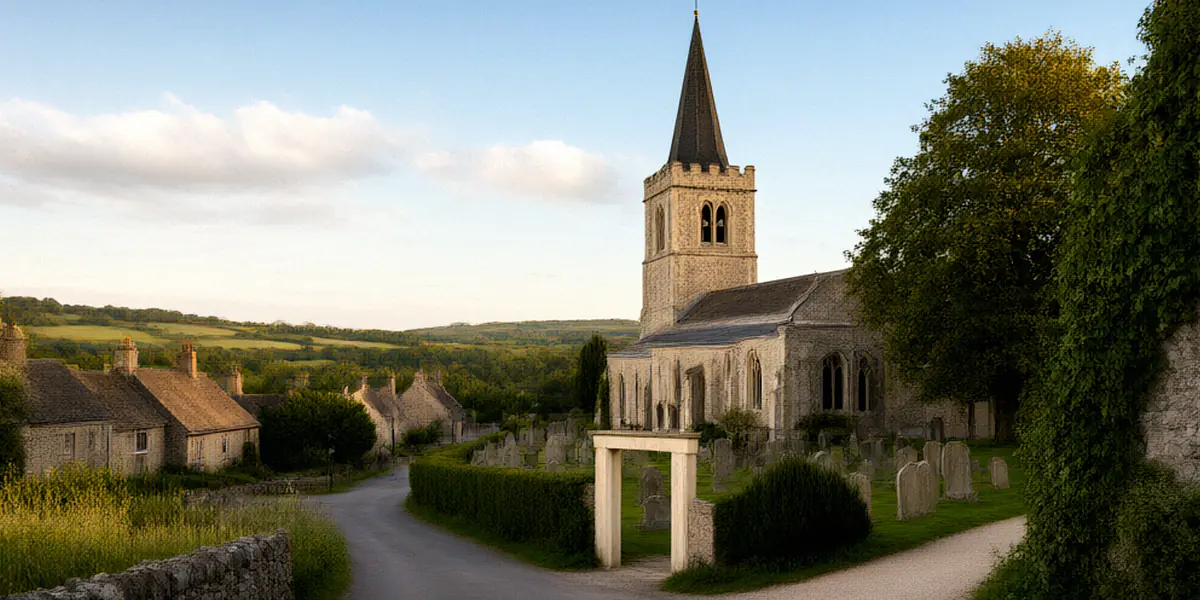
All Saints, Little Somborne, is a Grade II* listed church in the Test Valley district of Hampshire. It sits a short distance from the River Test, off the A3057 between Stockbridge and Winchester — a stretch of road that passes through some of the finest chalk-stream countryside in southern England. Because the church is not in a village centre and is screened by trees, it is easy to miss. We would argue that is part of its charm.
A Hamlet Without a Village Centre
Little Somborne is a scattered hamlet rather than a nucleated village. Houses are spread along lanes and farm tracks, and the church stands apart from most of them. This pattern is common in this part of Hampshire, where settlement shifted over centuries and some parishes ended up with a church isolated from the main cluster of homes. The result is a building that feels private and contemplative, even on a bright afternoon.
The name “Somborne” links the hamlet with its larger neighbours — Kings Somborne and the surrounding manors — and reminds us that this was once part of a wider estate landscape. The church served a small farming community, and its scale reflects that: modest, practical, and built for a congregation that never numbered in the hundreds.
Approaching the Churchyard and Its Yews
The approach to All Saints takes you through a churchyard that contains ancient yew trees and is managed for wildlife. We noticed unmown margins and longer grass left deliberately around the older graves — a sign that the parish is thinking about pollinators and small mammals as well as mowing schedules. In spring and early summer, this approach is full of wildflowers and birdsong.
The yews themselves are worth a moment. Some in Hampshire churchyards are centuries old, and the dark evergreen canopy gives the whole site a sheltered, almost secretive feel. We recommend pausing at the gate before going in — it is the best place to take in the relationship between church, trees and open fields.
The Architecture of a Medieval Parish Church
All Saints has Norman origins and retains medieval wall paintings and stained glass fragments, which makes it more interesting inside than its plain exterior might suggest. The fabric is typical of Test Valley parish church architecture: flint and rubble walls, a simple nave and chancel plan, and additions made century by century as money and need allowed.
Norman and Later Additions
The Norman work is the starting point. Look for the tell-tale signs: thick walls, small openings, and the general proportions of the nave. Later medieval builders added and altered — a chancel here, a window there — and the Victorian period left its own mark in the form of restoration, new glass and memorial tablets. This layering is what makes English parish churches so rewarding: you are reading a document in stone.
We always try to work out the sequence of building when we visit. At Little Somborne, the impression is of a small Norman church that was adapted rather than rebuilt. That continuity matters — it means the medieval paintings inside have survived in a space that has been in continuous use for worship for roughly nine centuries.
Reading the Exterior Stonework
The exterior repays close looking. Flint and rubble walls are characteristic of this region, where good building stone was scarce and local materials had to serve. You can often spot where a window has been inserted, where a doorway has been blocked, and where render or pointing has changed over time.
We suggest walking the full circuit of the church before going inside. Note the buttresses, the roofline, and the way the chancel sits lower or narrower than the nave. These details are not decorative flourishes — they are the practical record of how a small Hampshire parish built and maintained its church.
Medieval Wall Paintings and Stained Glass Inside
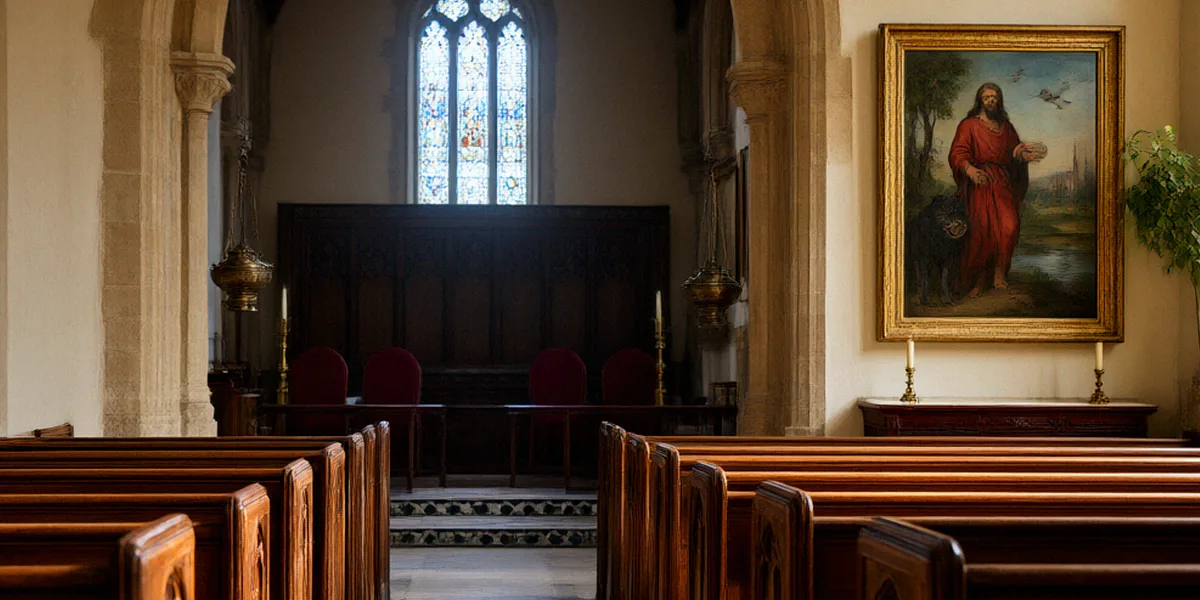
Inside, the two features that draw us back are the surviving medieval wall paintings and the stained glass. Neither is complete, and that is precisely why they reward attention. Fragmentary medieval art asks you to look harder, to reconstruct, and to imagine what the walls once looked like when they were covered in colour.
Surviving Schemes on the Nave Walls
Medieval wall paintings in Hampshire churches were usually whitewashed over at the Reformation and rediscovered centuries later. At All Saints, the surviving schemes on the nave walls give a glimpse of what was once a fully painted interior. Figures, borders and decorative patterns emerge faintly from the plaster, and the best way to see them is to let your eyes adjust and to use a torch at a low angle rather than a bright direct beam.
We find it helpful to think about what these paintings were for. They were not decoration in the modern sense — they were teaching tools for a congregation that could not read, and they guided the eye through the liturgical year. Even in fragments, they carry that purpose.
Stained Glass Fragments and Victorian Additions
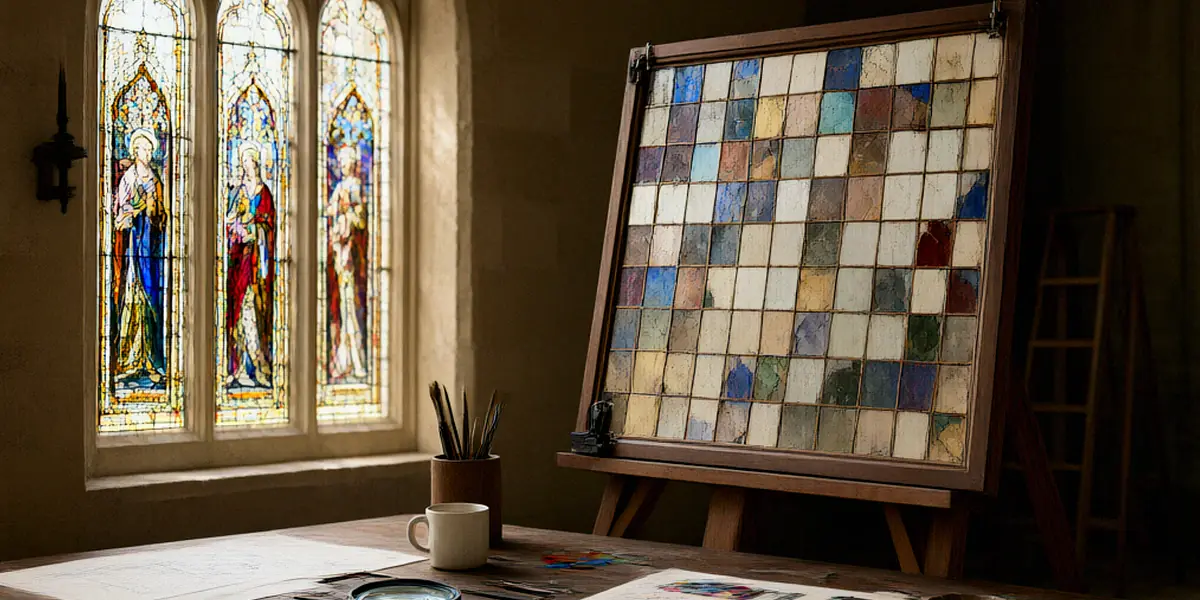
The stained glass at Little Somborne is a mix of medieval fragments and Victorian additions. Look for small pieces of medieval glass reset into later windows — often a face, a hand, a piece of canopy work or a fragment of inscription. These survivals are easily overlooked, but they are among the most precious things in any parish church.
The Victorian glass, by contrast, is usually easier to read: clearer narrative scenes, brighter colours, and a more confident style. Seeing the two together is a useful reminder that stained glass is not a single tradition but a conversation across centuries.
Monuments, Brasses and Local History
The memorials inside All Saints connect the building to the families who lived and farmed here. Floor brasses and wall tablets record names, dates and relationships, and taken together they form a social history of the hamlet.
Floor Brasses and Wall Tablets
Floor brasses are among the most vulnerable features in any church — worn by footsteps, sometimes lifted or lost. Where they survive, they give us clothing, posture and heraldry as well as names. Wall tablets, usually of the eighteenth and nineteenth centuries, tell a different story: classical motifs, carefully composed inscriptions, and a concern with respectability that says as much about the era as about the deceased.
We always photograph inscriptions when we can, and we recommend checking them against local records. A single brass or tablet can open up a whole network of related families across the Test Valley.
The Somborne Manors and Their Churches
Little Somborne belongs to a group of settlements — including Kings Somborne — that shared manorial and ecclesiastical history. The churches of the area are best understood together rather than in isolation, because patronage, tithes and family connections linked them for centuries. Visiting one Somborne church makes you want to visit the others.
Visiting Little Somborne All Saints Today
If you are planning a visit, a little preparation helps. This is a rural church with limited facilities nearby, so it pays to think about timing, parking and what else you want to see in the area.
Access, Parking and Opening Times
Opening arrangements vary, as they do for most small Hampshire churches. We recommend checking the parish website or the local benefice information before travelling, and being prepared to find the church locked outside advertised hours. Many rural churches are open daily in summer and more restricted in winter.
- Check the parish or benefice website for current opening times before setting out.
- Park considerately on the lane or in the designated area near the church — do not block farm access.
- Bring a small torch for reading wall paintings and brasses at a low angle.
- Wear sensible footwear; the churchyard paths can be uneven and damp.
- Take away everything you bring — there are no bins on site.
Nearby Churches to Visit
Little Somborne sits within easy reach of several other rewarding churches, and we would build a half-day or full-day route around them:
- St Peter and St Paul, Kings Somborne — the larger neighbour, with its own medieval interest and a proper village setting.
- St Mary, Stockbridge — a handsome church in a busy small town on the River Test, ideal for combining with lunch.
- The wider Test Valley group of churches along the A3057 between Stockbridge and Winchester.
We usually allow an hour at Little Somborne itself and then move on. The contrast between the isolated hamlet church and the busier town churches nearby is part of what makes the day work.
FAQ
Is All Saints, Little Somborne, open to visitors?
Opening hours vary by season and are set by the parish. We recommend checking the benefice or parish website before travelling, as small rural churches are sometimes locked outside advertised times.
Where exactly is Little Somborne?
Little Somborne is a small hamlet near the River Test and the A3057 between Stockbridge and Winchester in Hampshire. The church sits apart from the main cluster of houses, among fields and yew trees.
Does the church have medieval wall paintings?
Yes. All Saints has Norman origins and retains medieval wall paintings and stained glass fragments. The paintings are fragmentary, so bring a small torch and view them at a low angle for the best results.
What else can we see nearby?
Nearby churches include St Peter and St Paul, Kings Somborne, and St Mary, Stockbridge. Both make good companions to a visit to Little Somborne and are within a short drive.
Is the churchyard good for wildlife?
Yes. The churchyard at All Saints contains ancient yew trees and is managed for wildlife, with longer grass and margins left in places to support wildflowers and insects.
Small Hampshire churches like All Saints, Little Somborne, are not tick-box attractions. They ask for time — a slow walk around the exterior, a quiet ten minutes with the wall paintings, a careful read of a brass. We left with the sense that the building had done its job for centuries and would continue to do so, whether or not anyone was there to notice. If you are in the Test Valley, give it the hour it deserves.

Post Comment