Photographing Church Interiors: A Guide for Hampshire Churches
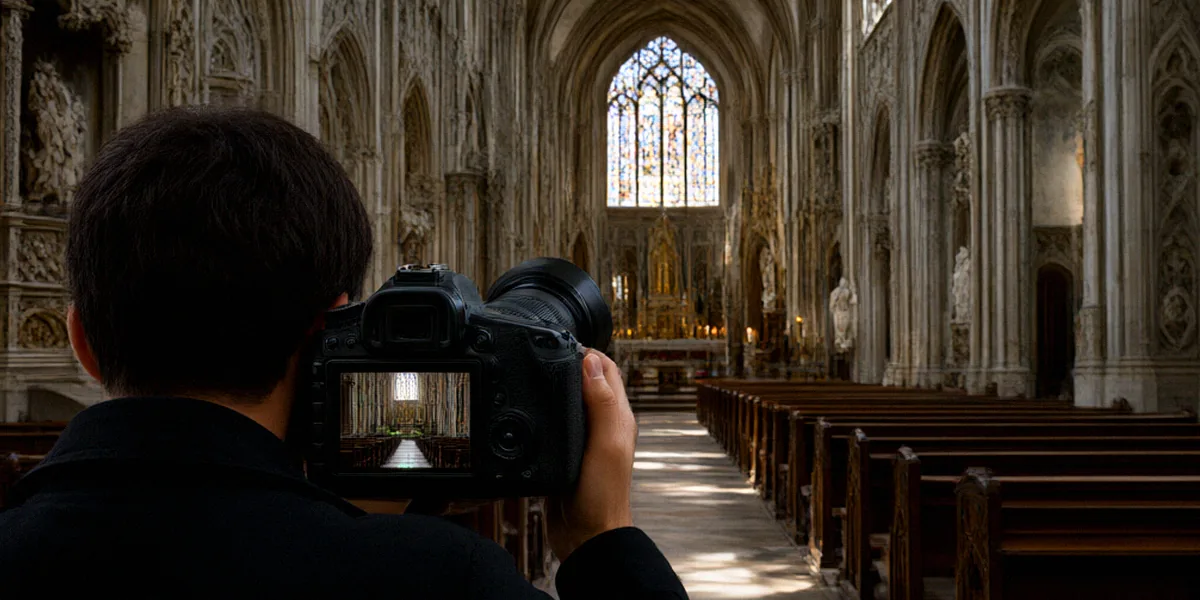
We still remember the first time we tried to photograph the interior of a small Hampshire parish church. It was a grey November afternoon, the light through the south aisle was barely enough to read by, and every shot came back either pitch black or blurred beyond recognition. After an hour of fiddling with settings, bracing the camera against a pew and muttering under our breath, we came away with three usable frames and a newfound respect for anyone who captures these buildings well. That frustration is exactly why we put this guide together. Once you understand light, gear and etiquette, photographing the dim, atmospheric interiors of Hampshire’s churches becomes one of the most rewarding pursuits a photographer can take on.
Why Photograph Hampshire’s Church Interiors?
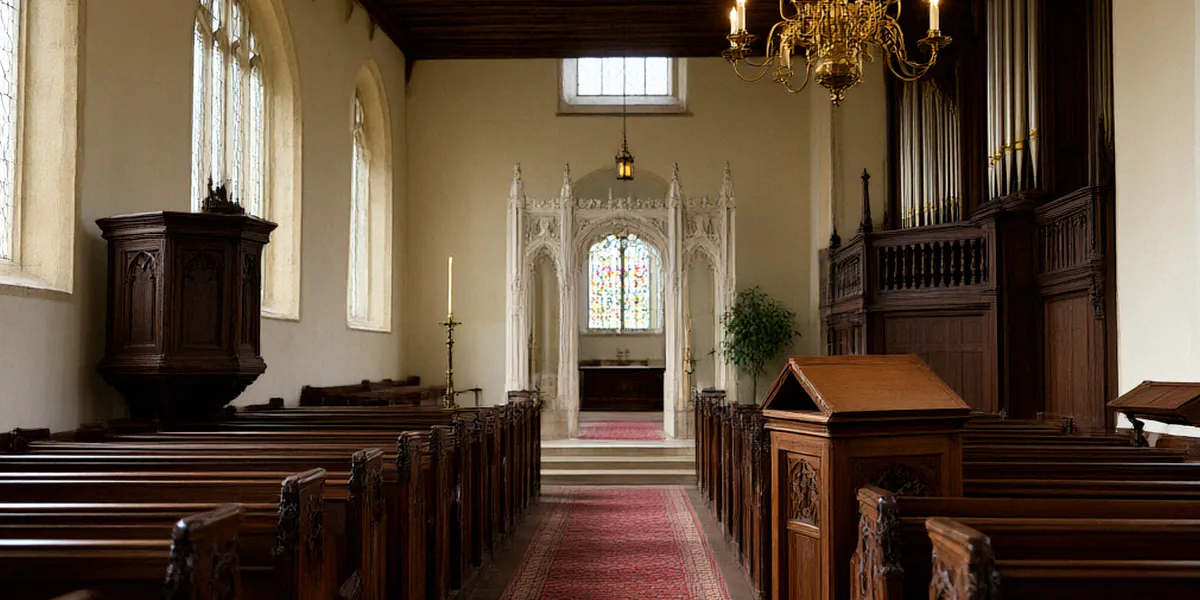
Hampshire is unusually blessed with medieval churches that have survived centuries of change, and many of them still hold treasures that most visitors walk straight past. St Mary’s Church in Twyford, for instance, features 12th-century wall paintings that reward anyone who takes the time to look properly. St Peter’s Church in Stockbridge holds notable stained glass by Charles Eamer Kempe, whose work is prized by glass historians across the country. And Romsey Abbey stands as a prime example of Norman architecture with impressive stained glass that shifts character entirely as the sun moves around the building.
The Spiritual and Historical Value of Church Interiors
These buildings are not museums, but they preserve history in a way that few other places can. Wall paintings fade, stained glass cracks, stonework erodes. Every photograph we take becomes part of a loose, informal record of what these interiors look like now. For the churches themselves, good photography supports guidebooks, heritage displays and fundraising appeals. For us personally, it is a way of slowing down and truly seeing a place rather than simply ticking it off a list.
Challenges and Rewards of Low-Light Photography
Church interiors are genuinely difficult. Windows are often small, light is uneven, and flash is frequently forbidden or simply inappropriate. Add in the fact that many churches sit among trees or face north, and you have a recipe for exposure times measured in seconds rather than fractions. The reward, though, is that soft, glowing quality of light that no studio can replicate. Test Valley is home to numerous medieval churches with significant wall paintings, and each one presents its own puzzle of light and shadow to solve.
Essential Equipment for Church Photography
You do not need a professional kit to photograph church interiors, but you do need gear that copes with low light. A phone will manage in a bright chancel on a sunny day; it will struggle badly in a north aisle in February.
Cameras and Lenses for Low Light
Look for a camera with good high-ISO performance. Modern full-frame bodies from Canon, Nikon and Sony all handle ISO 3200 or 6400 well enough for web and print use, and even many APS-C models now perform admirably. Lenses matter just as much: a fast prime such as a 50mm f/1.8 or a 35mm f/2 lets in far more light than a kit zoom and is usually sharp wide open. If you shoot with a zoom, expect to need a tripod more often.
Tripods, Monopods and Supports
A sturdy tripod transforms church photography. It allows long exposures at low ISO, which keeps noise down and detail high. Always check the church’s rules first, as some discourage tripods during services or busy periods. A monopod is a useful compromise where tripods are restricted, and a beanbag or even a folded coat on a pew can steady a camera in a pinch.
Filters and Accessories
A few small items make a real difference:
- A remote release or the camera’s self-timer, to avoid shake when pressing the shutter
- A polarising filter, useful for cutting reflections on glass and polished stone
- Spare batteries, since cold churches drain them faster than you expect
- A microfibre cloth for dust and condensation on the lens
- A small torch with a diffuser for checking focus in dark corners
Mastering Natural and Artificial Light
Light is the whole game in church photography. Understanding where it comes from and how it behaves will improve your images more than any new lens.
Working with Window Light
Windows act as enormous softboxes, but their direction changes constantly. Morning light favours east-facing chancels, while afternoon sun lights up west windows and south aisles. Walk the building before setting up. Look for light falling across stonework, catching the edge of a pew or illuminating a wall painting. Exposure bracketing — shooting several frames at different shutter speeds — is a reliable way to guarantee at least one correctly exposed image.
Dealing with Mixed Lighting
Many churches now mix daylight from windows with tungsten or LED artificial light, which can produce odd colour casts. Setting a custom white balance helps, as does shooting in RAW so you can correct colour later. HDR techniques, merging several exposures of the same scene, work well for interiors with bright windows and dark corners, though the result should still look natural rather than flat.
Using Flash Respectfully
Flash is often prohibited, and even where it is allowed, it can damage sensitive surfaces and disturb worshippers. If you do use it, bounce it off a wall or ceiling rather than firing directly, keep power low, and never use it near wall paintings or during prayer. When in doubt, leave it in the bag and use a tripod instead.
Composition and Framing Techniques
Once the exposure is under control, composition is what separates a record shot from an image that does a church justice.
Capturing Architecture and Symmetry
Church architecture loves symmetry. Stand on the centre line of the nave, level the camera carefully, and let the columns and arches lead the eye towards the altar. Romsey Abbey is a perfect place to practise this, with its Norman arcades offering strong repeating lines. Watch for converging verticals and correct them in editing if needed.
Highlighting Wall Paintings and Stained Glass
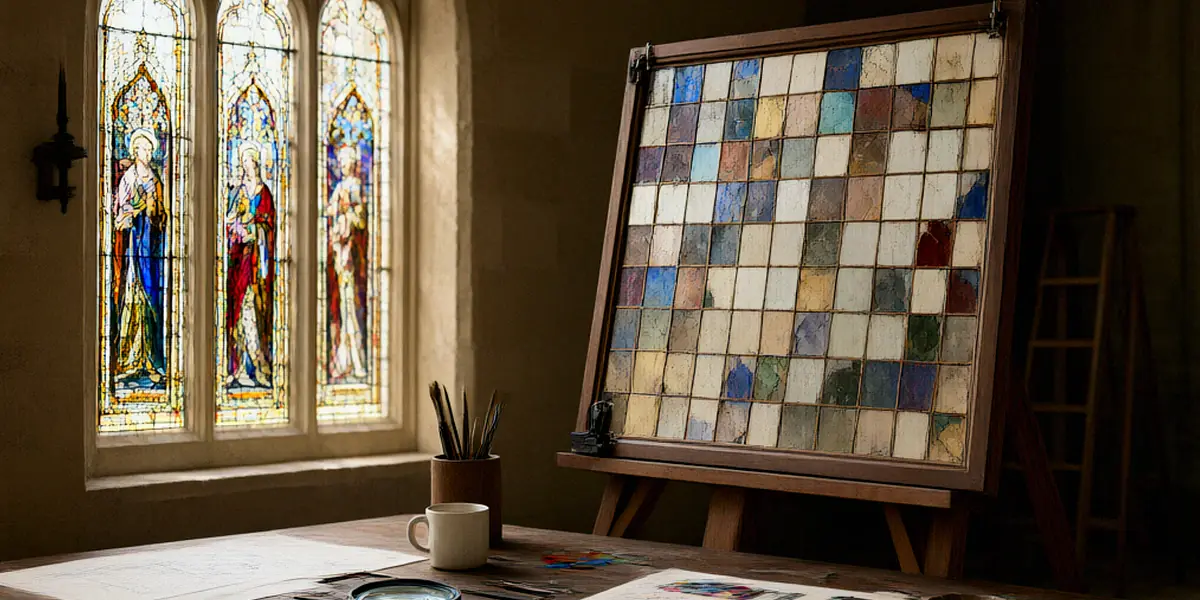
Wall paintings need soft, even light and a straight-on angle to avoid distortion. In Test Valley, several churches hold faded but remarkable medieval schemes worth seeking out. Stained glass is the opposite challenge: expose for the glass itself and let the interior fall dark, or bracket and blend. St Peter’s Church in Stockbridge and the windows of Romsey Abbey both reward careful framing.
Details and Close-Ups
Do not overlook the small things: carved bench ends, memorial brasses, embroidered kneelers, the texture of old stone. A macro lens or a close-focusing prime will pick out details that tell the story of a building just as effectively as a wide shot of the nave.
Church Etiquette and Legal Considerations
Photography in churches is a privilege, not a right, and treating it that way keeps the door open for everyone.
Asking Permission and Building Relationships
Always ask before setting up. Many churches are open daily and welcome photographers, but some require you to contact the parish office or churchwarden in advance. The Church of England’s guidelines on photography in churches make clear that permission should be sought, particularly for anything beyond casual personal use. Building a friendly relationship with a churchwarden often leads to access you would never get otherwise.
Copyright and Image Use
Copyright in a building’s fabric and in modern stained glass or artwork may belong to the artist or the parish. If you plan to publish images commercially, check whether a permit or licence is needed. Never sell images of a church in a way that implies official endorsement.
Accessibility and Sensitivity
Avoid photographing during services, funerals or private prayer. Be mindful of people in the frame, especially children, and never move furniture or objects without permission. If a service begins while you are working, pack up quietly and come back another day.
Post-Processing and Sharing Your Images
Good editing lifts a church photograph without turning it into something it is not.
Basic Editing Workflow
We start in Lightroom or Adobe Camera Raw, correcting white balance, lifting shadows and gently recovering highlights. Noise reduction and sharpening come next, then a light crop to straighten verticals. Photoshop is useful for removing distracting exit signs or merging bracketed exposures, but it should be used sparingly.
Ethical Considerations in Editing
Editing should reveal what the eye saw, not invent it. Avoid heavy saturation that turns aged stone lurid, and never clone out significant features of a building. If you blend exposures, keep the result believable.
Sharing and Publishing Your Work
Share images with the church itself — many parishes are delighted to use them in newsletters or on their websites. Online, consider contributing to heritage archives or local history groups. Always credit the church and, where relevant, the artist or architect.
FAQ
Do I need permission to photograph inside a Hampshire church?
Yes, in most cases. The Church of England’s guidelines on photography in churches ask visitors to seek permission from the parish, particularly for anything beyond casual personal snapshots. A quick email or word with the churchwarden is usually all that is needed.
What is the best lens for photographing church interiors?
A fast prime, such as a 35mm or 50mm f/1.8, is ideal. It gathers plenty of light, keeps distortion low and is light enough to carry all day. A wide-angle lens is useful for naves, but it can exaggerate perspective.
Can I use flash inside a church?
Often no, and even where it is permitted, we would advise against it near wall paintings, stained glass or during prayer. A tripod and a long exposure almost always produce a better result.
Where can I see medieval wall paintings in Hampshire?
St Mary’s Church in Twyford features 12th-century wall paintings, and Test Valley is home to numerous medieval churches with significant wall paintings worth exploring.
Is it worth photographing Romsey Abbey?
Absolutely. Romsey Abbey is a prime example of Norman architecture with impressive stained glass, and its scale and symmetry make it one of the finest subjects in the county.
Photographing Hampshire’s church interiors takes patience, the right kit and a good deal of respect for the buildings themselves. Start with one church, learn its light, ask permission and take your time. Whether you are drawn to the 12th-century wall paintings at St Mary’s in Twyford, the Kempe glass at St Peter’s in Stockbridge or the Norman grandeur of Romsey Abbey, every visit adds to the record of our shared heritage — and to your own enjoyment of it. We would love to hear which Hampshire churches you have photographed and what you learned along the way.

Post Comment